
A crowded pantry can turn a simple dinner into a search through half-empty bags and forgotten cans. Thoughtful pantry organization makes everyday ingredients easier to see, reach, and return to the right place.
These ideas will help you create practical zones, use awkward shelf space, reduce duplicate purchases, and spot low supplies before your next grocery run. Choose the changes that fit your pantry rather than trying to overhaul everything at once.
Pantry Organization Foundations
1. Create Zones Based on How You Cook
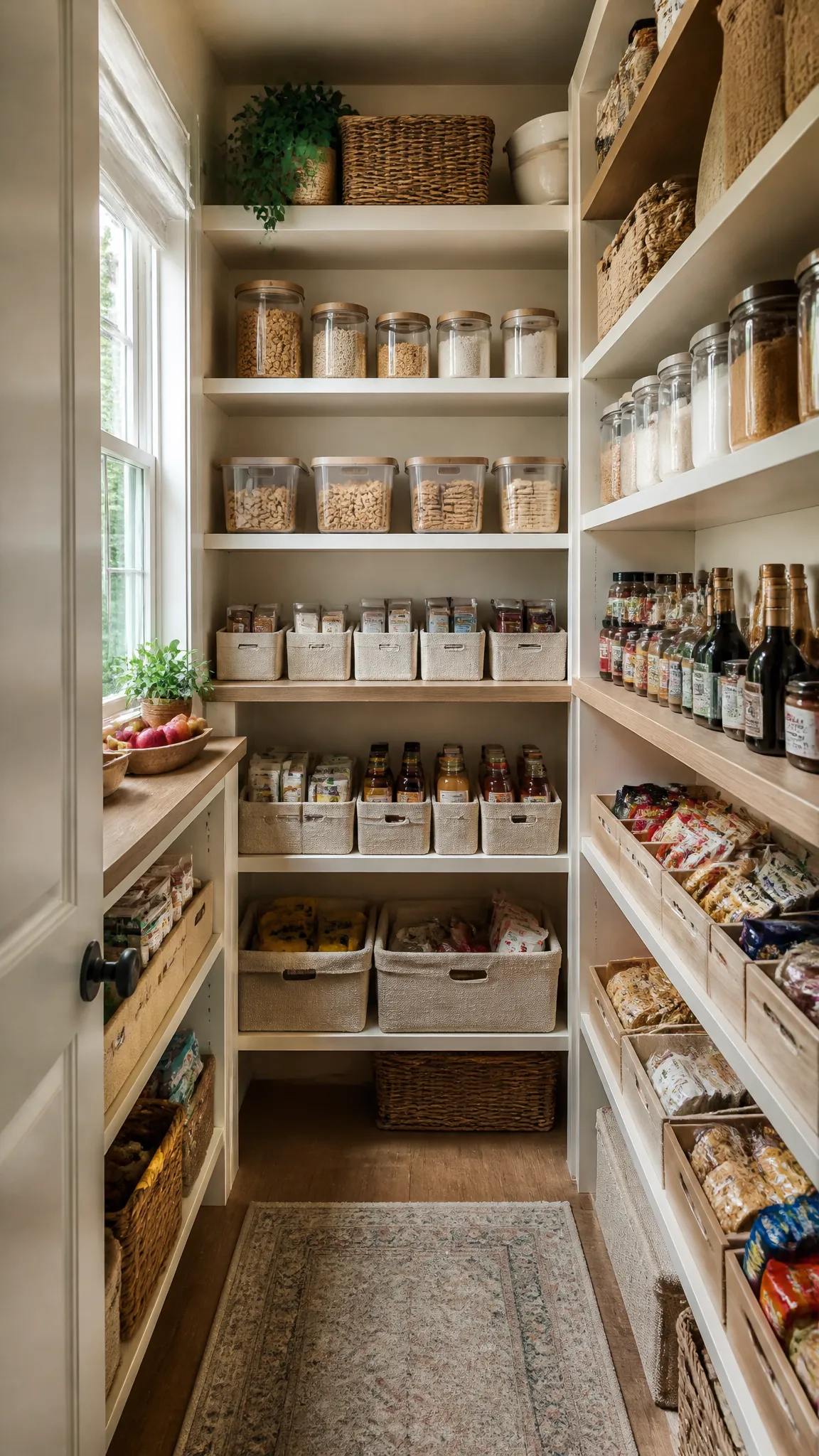
Group food by purpose instead of arranging everything solely by package type. Useful zones might include breakfast, baking, weeknight dinners, snacks, canned goods, and lunch-packing supplies, giving each ingredient a predictable home.
Keep your most-used zone between waist and eye level. Place occasional ingredients higher up, and reserve lower shelves for heavier goods or family-friendly items that children can safely reach.
2. Keep Everyday Ingredients at Eye Level
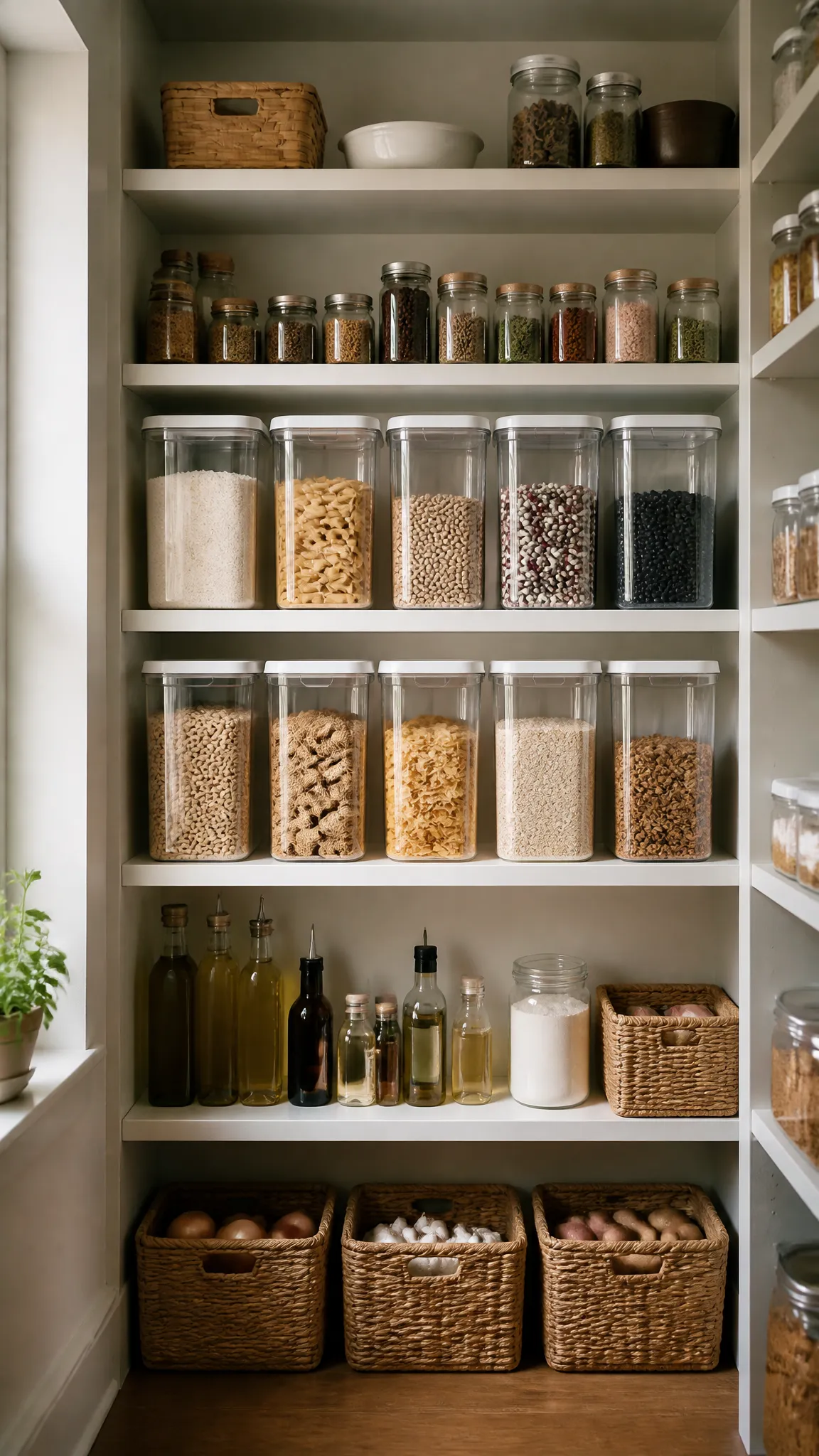
Give prime shelf space to the ingredients you reach for several times a week, such as rice, pasta, beans, cereal, or cooking oils. This small change reduces searching and keeps everyday cooking moving.
Move backup packages and specialty foods above or below that area. For effective shelf organization, avoid filling the eye-level shelf so tightly that products disappear behind one another.
3. Add Removable Shelf Labels
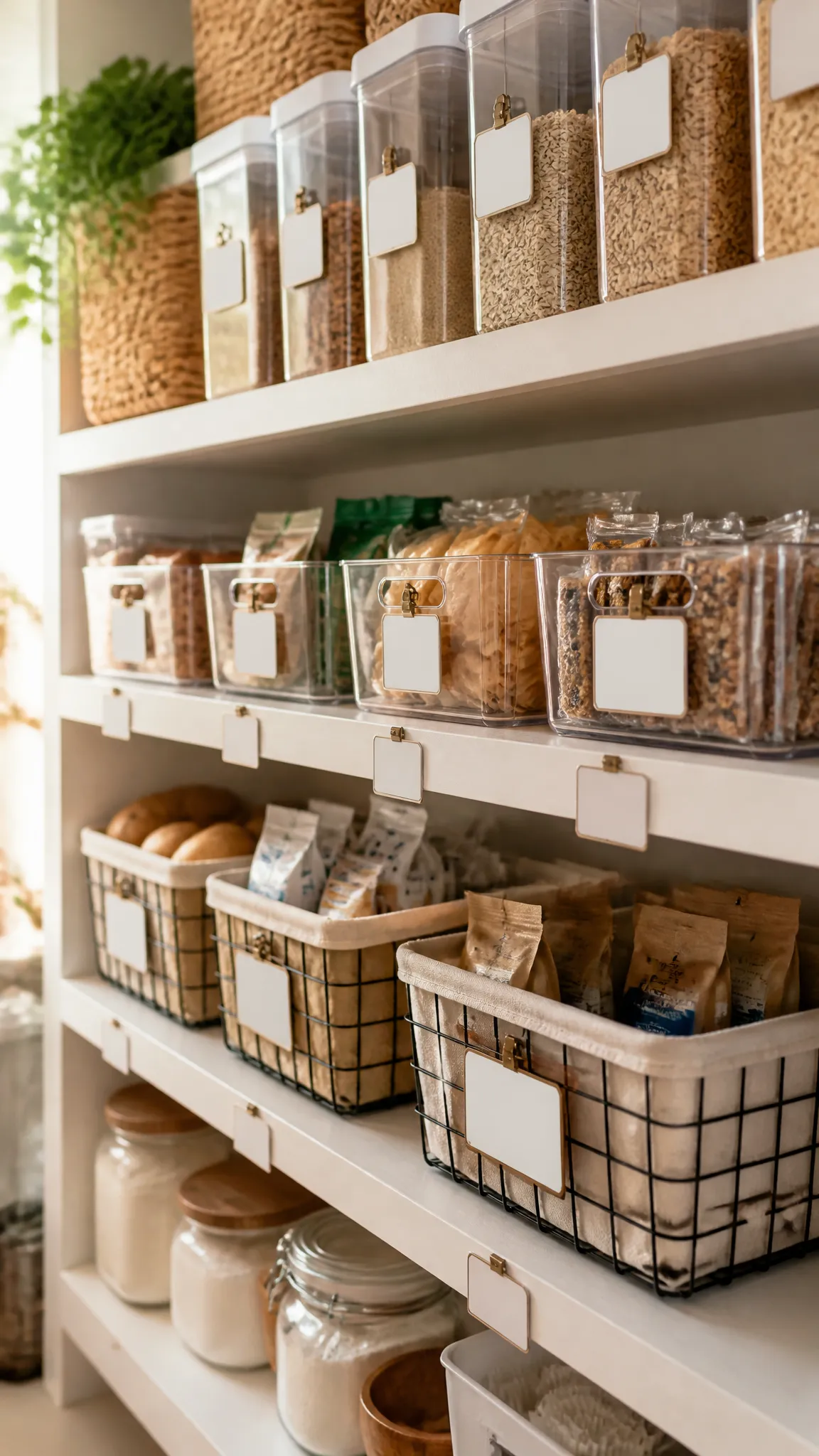
Labels establish where categories belong, which helps everyone return groceries to the same place. Choose removable adhesive labels, clip-on tags, or dry-erase markers so your layout can change with your household’s needs.
Use broad category names rather than assigning a spot to every individual product. A flexible label such as grains remains useful even when oatmeal replaces rice or package sizes change.
4. Leave Room for Incoming Groceries
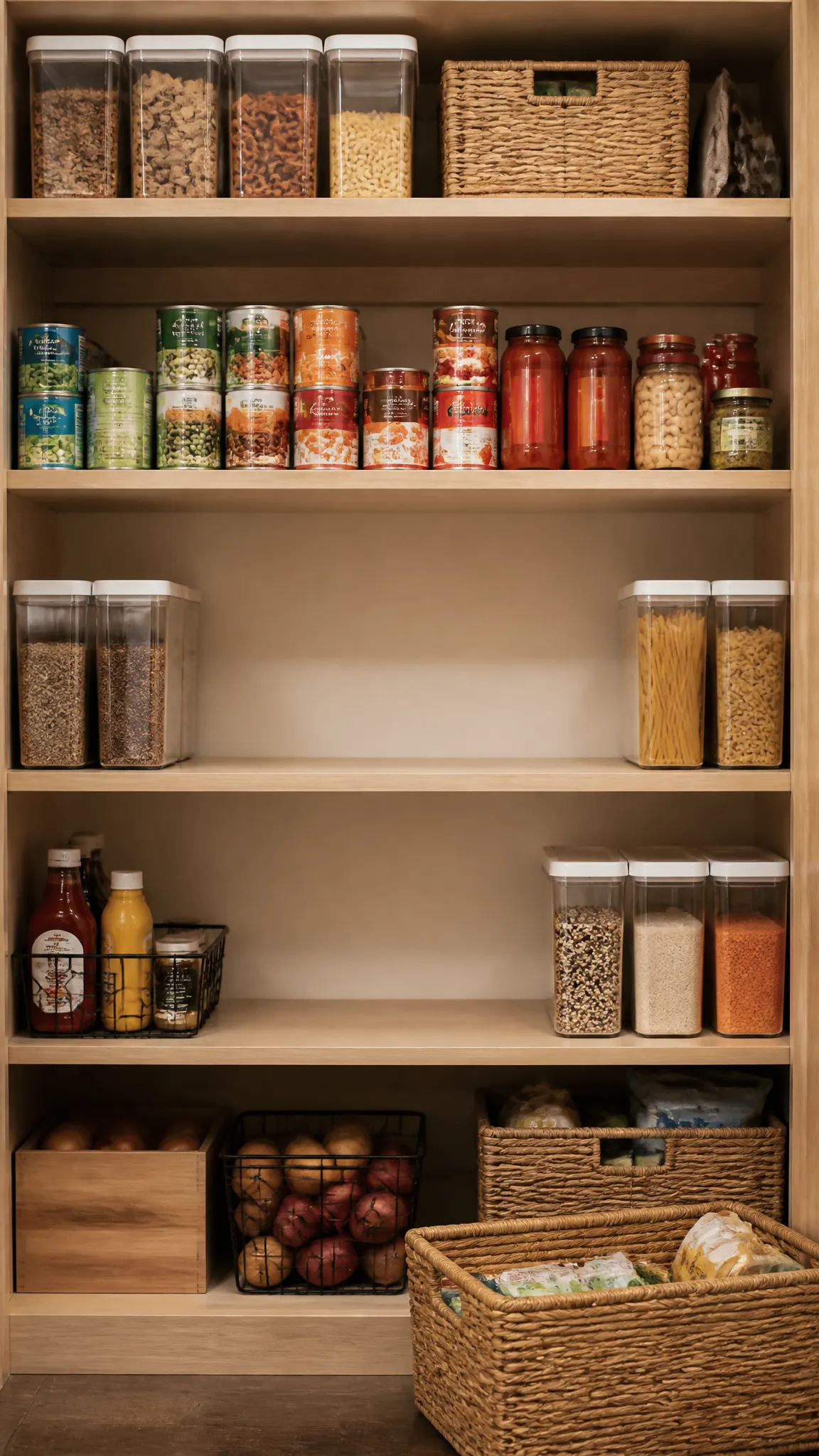
A pantry packed to its edges has nowhere to hold a regular grocery trip. Leave a little open space in frequently replenished zones so new cans, boxes, and bags can be put away without rearranging the shelf.
This breathing room also makes existing supplies more visible. If space is limited, designate one overflow basket for temporary extras rather than scattering them throughout the pantry.
Containers and Shelf Solutions
5. Use Clear Bins for Loose Packages

Clear bins contain small packets, pouches, and oddly shaped bags while keeping their contents visible. They work especially well for snacks, baking decorations, instant meals, and lunch-box add-ons that otherwise tip over or spread.
Select bins that can be lifted comfortably when full. Straight sides generally use shelf width efficiently, while open fronts provide quick access without requiring you to pull out the entire container.
6. Decant Only the Foods That Benefit
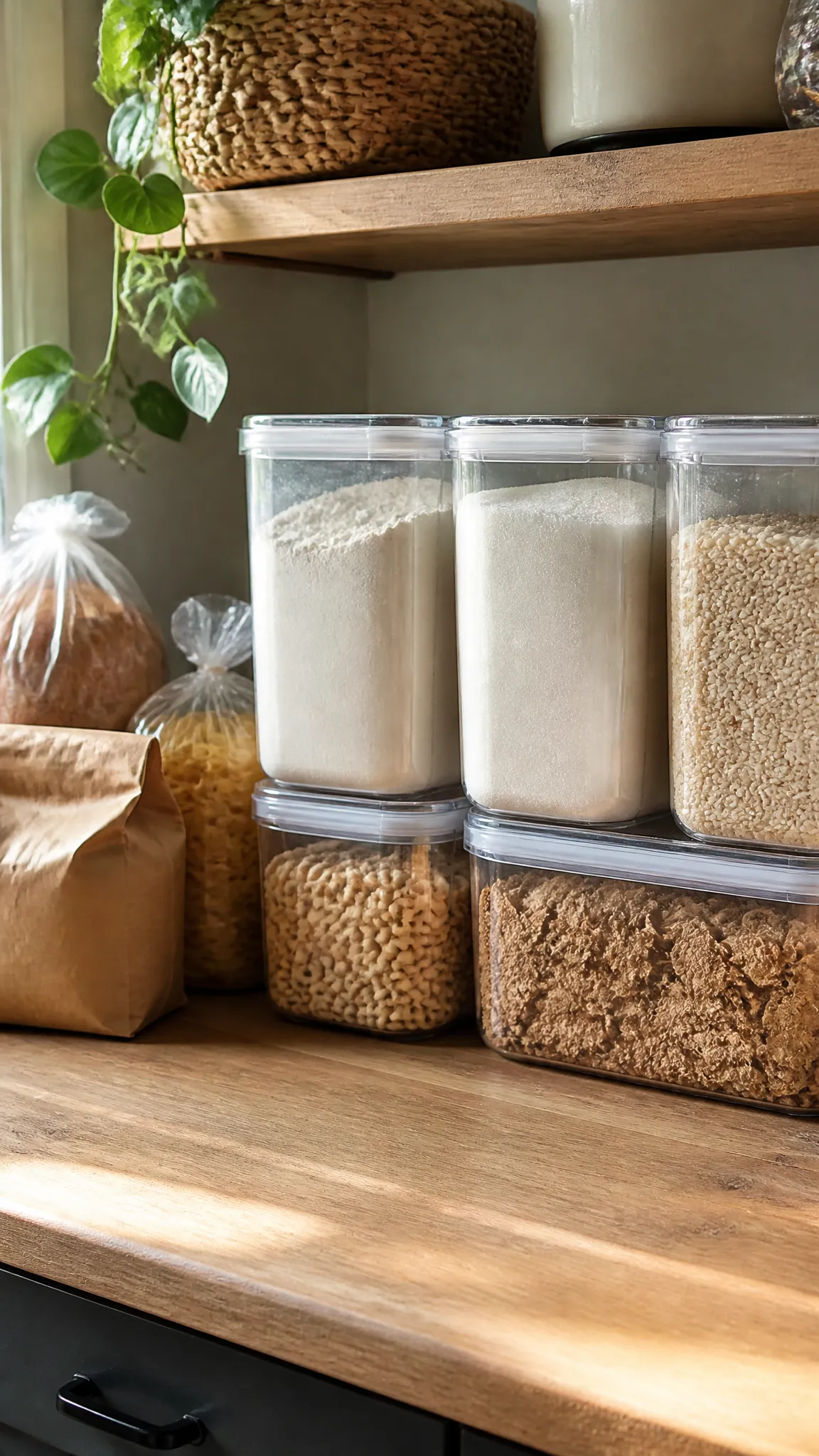
Matching pantry containers can make dry goods easier to scoop and protect opened packages from spills, but not everything needs decanting. Start with flour, sugar, rice, cereal, or other staples you buy and use consistently.
Choose food-safe containers with secure lids, then record relevant cooking directions and expiration details. Avoid pouring a new purchase over an older batch because that can hide food that should be used first.
7. Add Shelf Risers for Cans and Jars

Tiered risers let you see items in the second and third rows instead of creating a wall of cans. They’re useful for canned vegetables, soup, sauces, nut butter, and short jars stored on deep shelves.
Measure both the shelf and your tallest typical item before selecting a riser. Leave enough vertical clearance to remove products without bumping the shelf above or destabilizing the rows.
8. Install an Under-Shelf Basket

An under-shelf basket turns unused vertical space into storage for lightweight goods. Use one for tortillas, wraps, napkins, snack bags, or other flat items that tend to get buried under heavier packages.
Check that the basket fits the shelf thickness securely and doesn’t obstruct the area below. Keep the load light so the shelf remains stable and the basket slides or clips into place properly.
9. Use Turntables for Bottles and Condiments
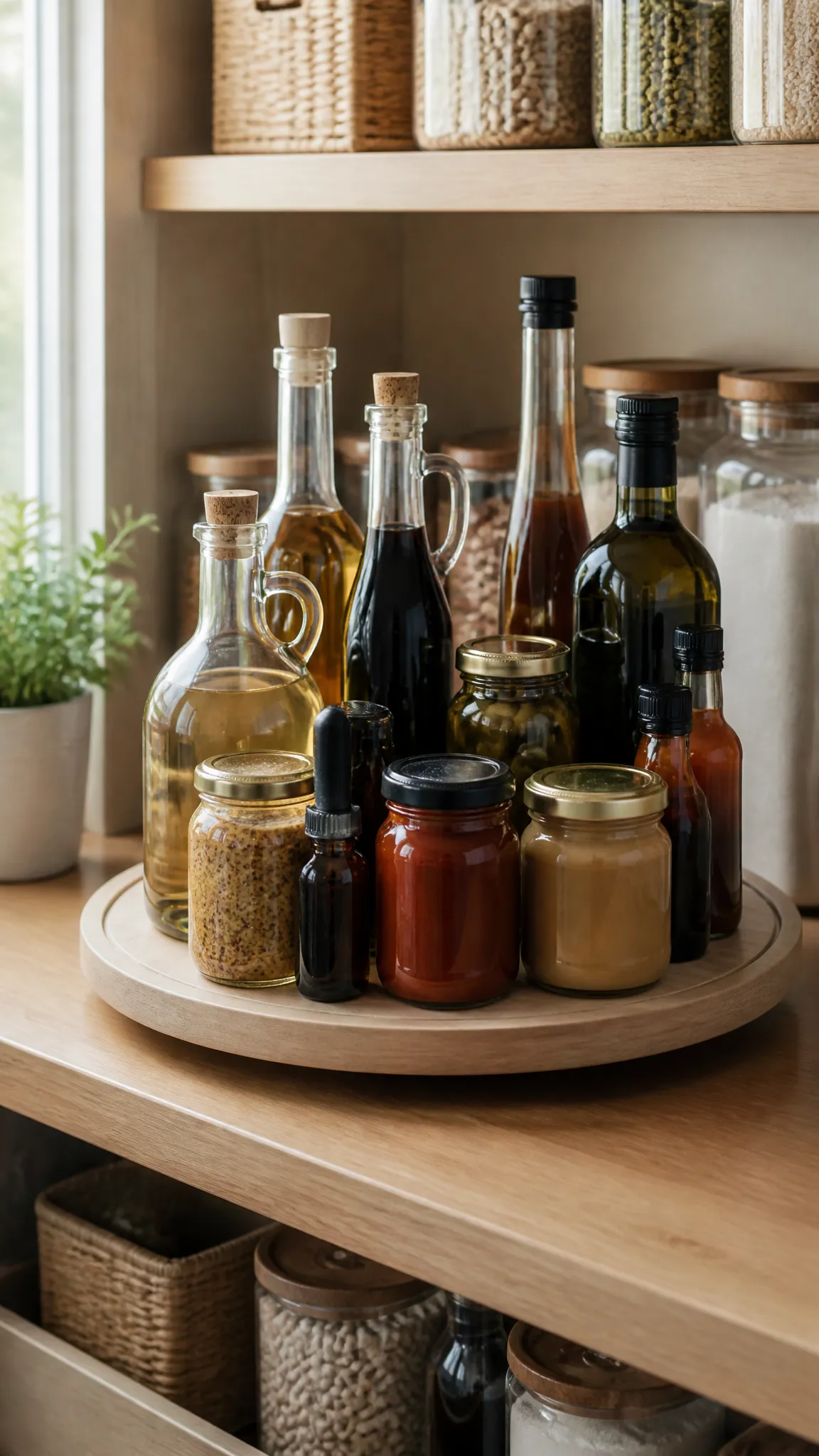
A turntable brings small bottles from the back of a shelf to the front with one rotation. It’s particularly practical for vinegar, sauces, extracts, spreads, and jars that are difficult to arrange in straight rows.
Choose a model with a raised rim to help prevent tipping. Avoid overloading it with tall, top-heavy bottles, and place frequently used products around the outer edge for easier access.
10. Divide Drawers and Pull-Out Shelves

Deep pantry drawers can quickly become mixed piles unless their contents have boundaries. Adjustable dividers or small open bins keep snack bars, seasoning packets, baking tools, and refill bags in separate sections.
Match each compartment to a category you regularly buy. Keep divisions broad enough to accommodate changing package sizes, and avoid stacking items above the drawer’s safe closing height.
Ideas for Small or Deep Pantries
11. Use the Back of the Door

The inside of a pantry door can hold shallow racks for spices, packets, foil, and lightweight bottles. This approach supports small pantry organization by using vertical space without reducing room on the main shelves.
Measure door clearance, hinge movement, and nearby shelving before installing anything. Secure the organizer properly and keep heavy glass containers off racks that aren’t designed to support them.
12. Assign Deep Shelves Front-to-Back

For practical deep pantry organization, store related items in front-to-back lanes instead of unrelated rows. A pasta lane, for example, can hold the open package in front and unopened backups directly behind it.
Use long handled bins when individual items would be hard to retrieve. Avoid containers that are so deep or heavy that checking the contents becomes another chore.
13. Store Backstock on Upper Shelves

Keep unopened duplicates together on an upper shelf rather than mixing them with active supplies. A dedicated backstock area makes it easier to see what you already own before shopping.
Arrange backups by the same categories used below, and move the oldest package into the working zone first. Store only lightweight goods overhead, using a stable step stool when necessary.
14. Add Rolling Storage Near the Pantry

A slim rolling cart can extend storage when the pantry itself can’t hold everything. It’s useful for shelf-stable produce, beverages, lunch supplies, or baking ingredients that need a consistent but movable home.
Choose a cart that fits its parking spot without blocking traffic or doors. Place heavier items on the bottom tier for stability and keep food away from heat, moisture, and direct sunlight.
15. Hang Lightweight Tools on Wall Space

Unused side walls can hold aprons, reusable shopping bags, measuring cups, or lightweight baskets. Hooks free shelf space while keeping frequently used tools visible and close to the kitchen.
Position them where hanging items won’t brush against food or interfere with the door. Use hardware suited to the wall material and follow its stated weight limits.
Systems for Cooking and Restocking
16. Build a Weeknight Dinner Bin

Gather shelf-stable ingredients for reliable meals in one accessible bin. Pasta and sauce, taco components, curry supplies, or soup add-ins can stay together, reducing the number of shelves you need to check at dinnertime.
Restock the bin after using a meal combination rather than waiting until it’s empty. Keep fresh or frozen ingredients on a nearby planning note, not inside the pantry bin.
17. Make a Grab-and-Go Snack Station

Set aside one contained area for ready-to-eat snacks so loose packages don’t spread across multiple shelves. Use small bins to separate crackers, fruit cups, bars, and other household favorites.
Place age-appropriate choices within reach of the people using them. Refill from larger packages as needed, and rotate older items forward before adding newly purchased snacks.
18. Use a First-In, First-Out Row

Arrange duplicate cans, cartons, and jars so the oldest suitable item is used first. Put new purchases behind existing products, creating a simple first-in, first-out flow that reduces forgotten food.
Check package dates when restocking rather than assuming the newest purchase has the latest date. Bring anything needing prompt use to the front and include it in an upcoming meal.
19. Keep a Visible Restocking List

Place a paper list, magnetic pad, or reusable writing board near the pantry entrance. Add an item when you open the last backup, not after the final serving has already been used.
Organize the list roughly by grocery department to simplify shopping. If your household uses a shared digital list, post a small reminder near the shelf where shortages are most often noticed.
20. Schedule a Short Pantry Reset

Even strong systems drift as packages change and groceries arrive in a hurry. A brief recurring reset lets you return misplaced products, wipe crumbs, review dates, and identify food that should be used soon.
These Pantry Organizing Ideas work best when maintenance is easy. Tie the reset to a regular task, such as writing the grocery list, so your layout stays useful without requiring frequent overhauls.
Frequently Asked Questions
What should I organize first in a messy pantry?
Start with expired or unwanted food, then group what remains into broad categories. Organize the shelf containing your most-used ingredients first so you receive an immediate everyday benefit.
Are clear containers necessary for an organized pantry?
No. Original packaging, open bins, baskets, and shelf risers can work just as well. Containers are most helpful when they improve visibility, prevent spills, or make awkward packages easier to store.
How do I organize a pantry on a limited budget?
Begin by grouping similar foods, moving everyday staples to eye level, and reusing sturdy boxes or containers you already own. Buy organizers only after measuring and identifying a specific storage problem.
How often should I clean and reorganize my pantry?
Wipe spills as they happen and do a quick reset before grocery shopping. A more thorough review every few months can help you check dates, clean shelves, and adjust categories that no longer suit your routine.
Start With One High-Impact Shelf
You don’t need to complete your entire pantry organization project in one day. Choose the shelf you use most, create clear categories, and leave enough room for your next restock before moving on.