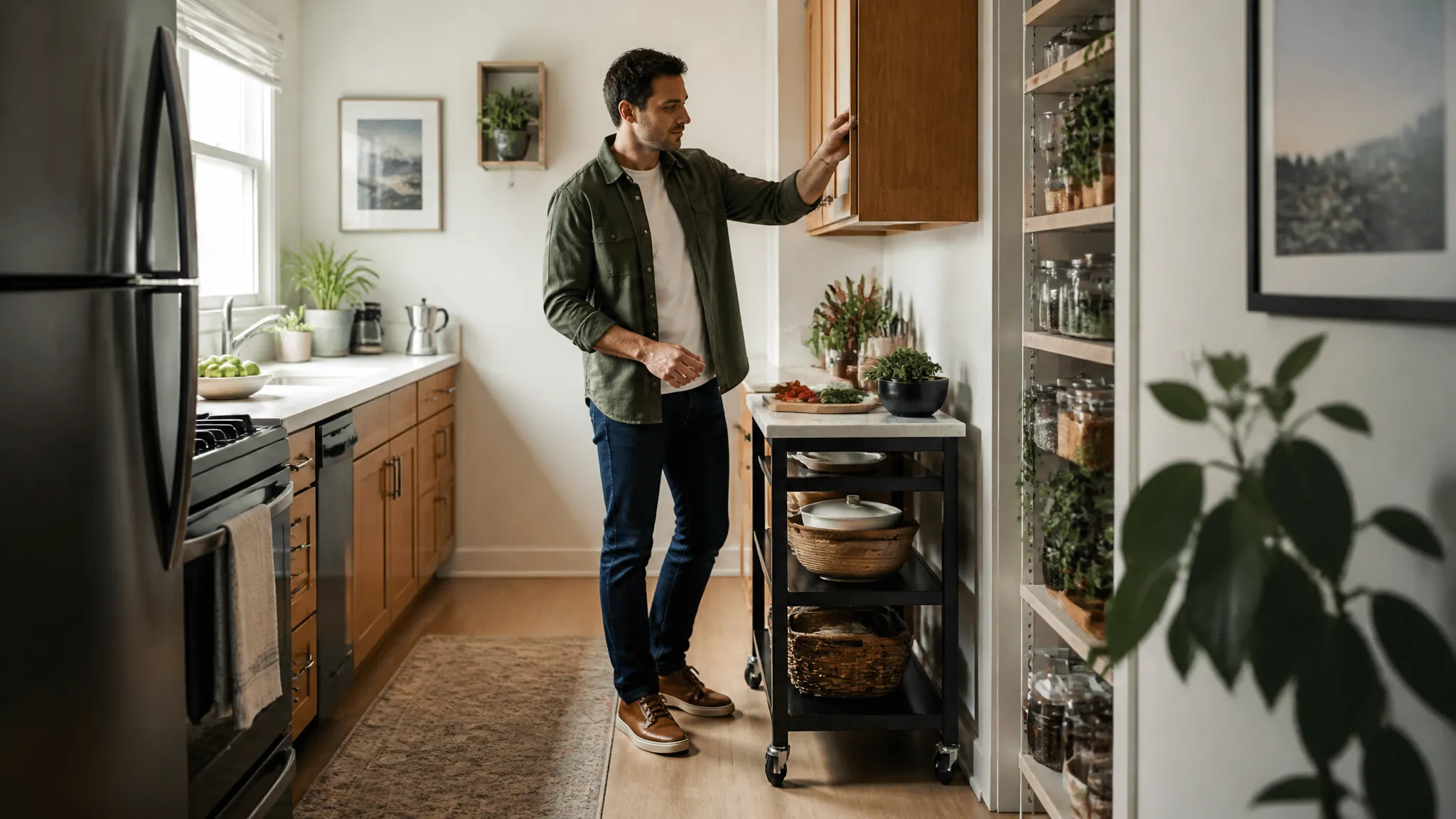
When counter space disappears by breakfast and opening one cabinet blocks another, even a quick meal can feel complicated. These small kitchen ideas will help you store more, reduce visual clutter, and move through daily tasks with fewer interruptions.
You’ll find practical fixes for cabinets, walls, work surfaces, and awkward corners, including options that don’t require a full remodel. Start with the trouble spot you notice most.
Small Kitchen Ideas for Cabinets and Drawers
1. Prioritize Wide Drawer Banks
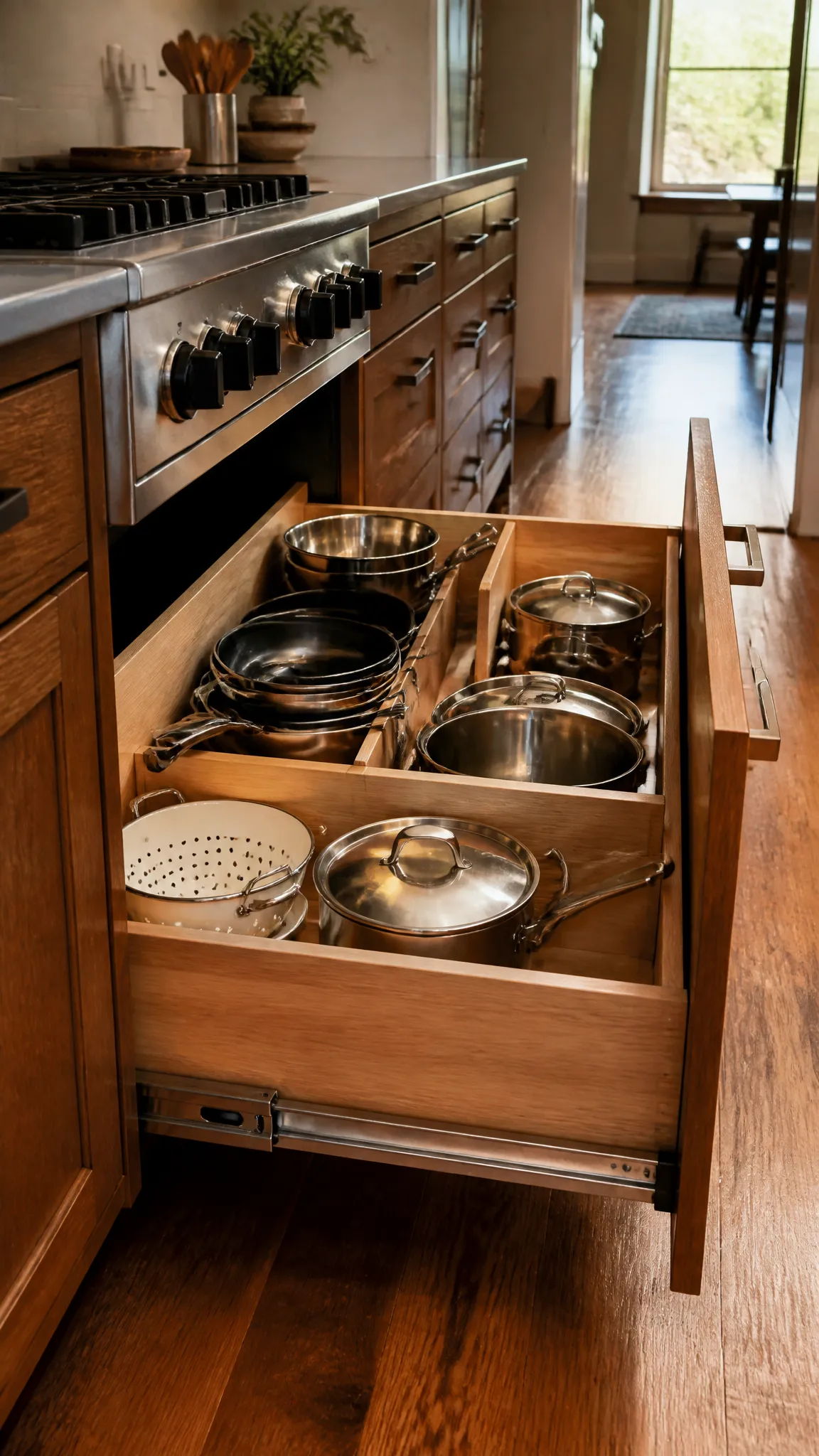
Deep drawers make pots, pans, mixing bowls, and food containers easier to see than items stacked at the back of a base cabinet. They’re especially helpful when you want storage that doesn’t require crouching and reaching.
When revising a small kitchen cabinet layout, place wide drawers near the range or main prep surface. Use adjustable dividers to prevent lids and small cookware from sliding into a jumble.
2. Add Pull-Out Cabinet Shelves
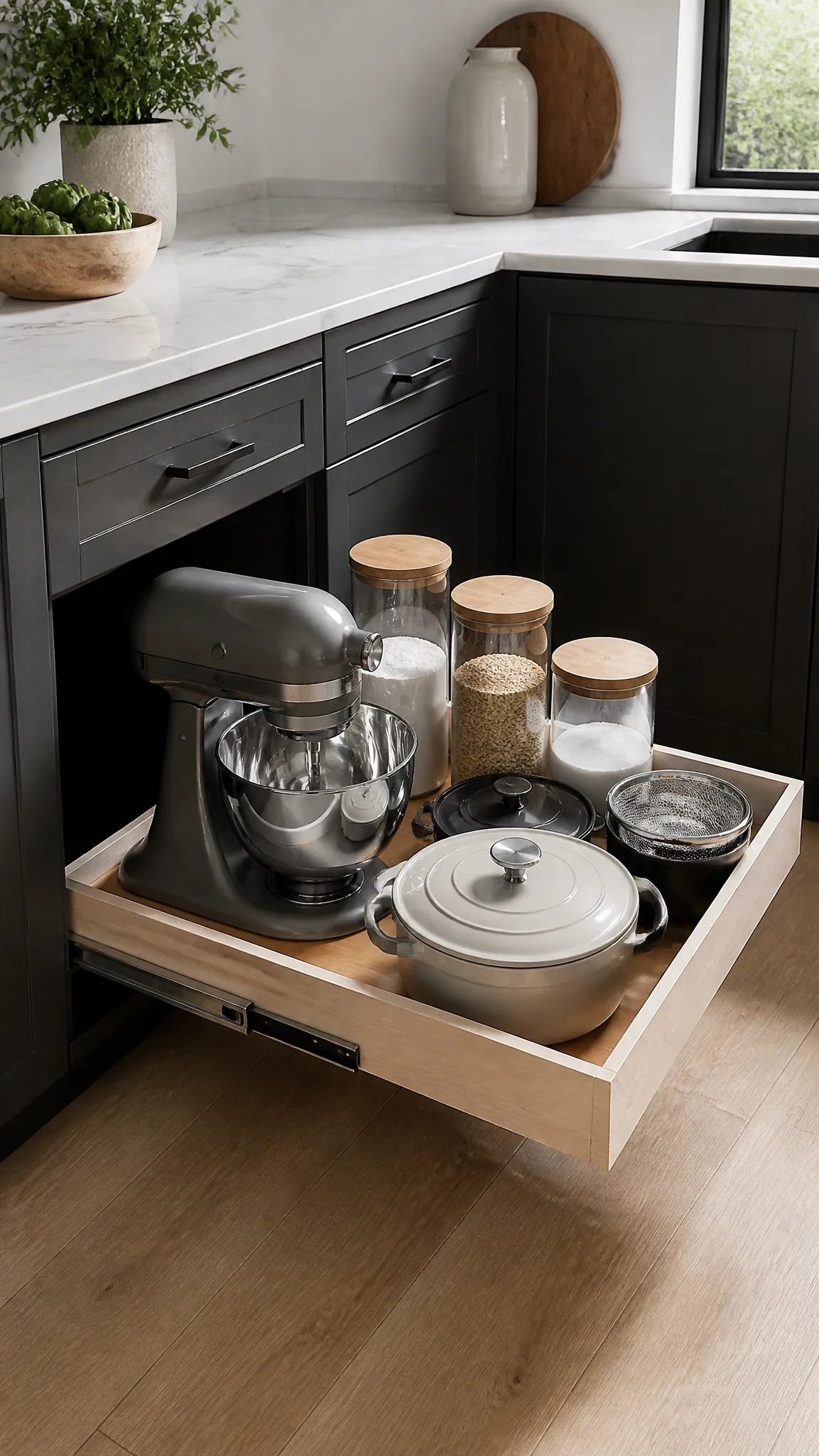
Pull-out shelves turn deep lower cabinets into accessible storage without changing the cabinet boxes. Instead of unloading everything in front, you can bring the entire shelf toward you.
Choose full-extension hardware when possible, and measure around hinges, plumbing, and the cabinet opening before buying inserts. Reserve these shelves for heavy or frequently used items such as small appliances and pantry staples.
3. Fit a Tray Divider Above the Refrigerator
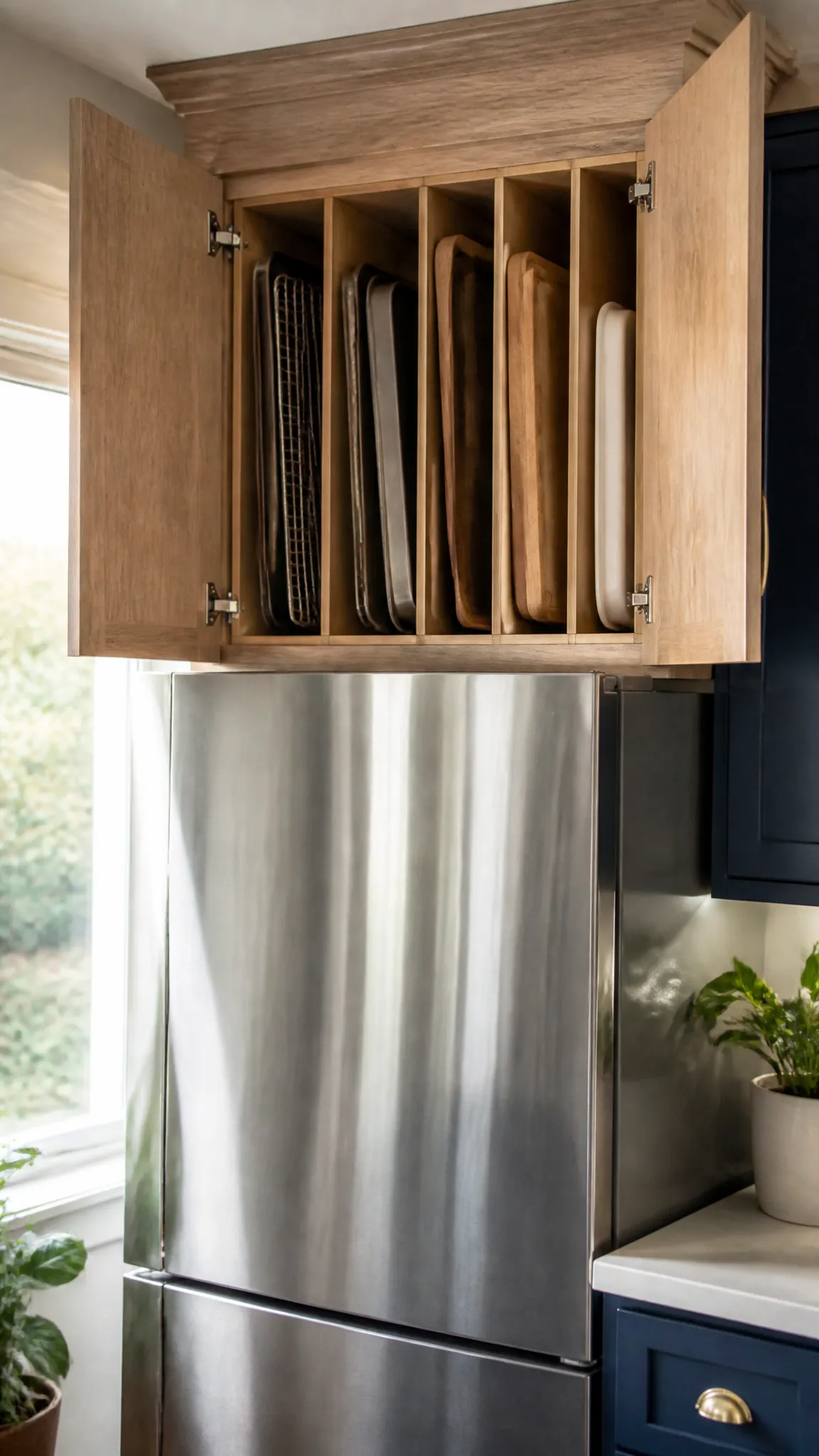
The cabinet above a refrigerator often becomes a hard-to-reach holding area for unrelated items. Vertical dividers make it more useful by keeping sheet pans, cutting boards, cooling racks, and serving trays upright.
Group pieces by height and place rarely used bakeware toward the back. A vertical arrangement lets you remove one tray without lifting an entire stack.
4. Use Cabinet Doors for Slim Storage
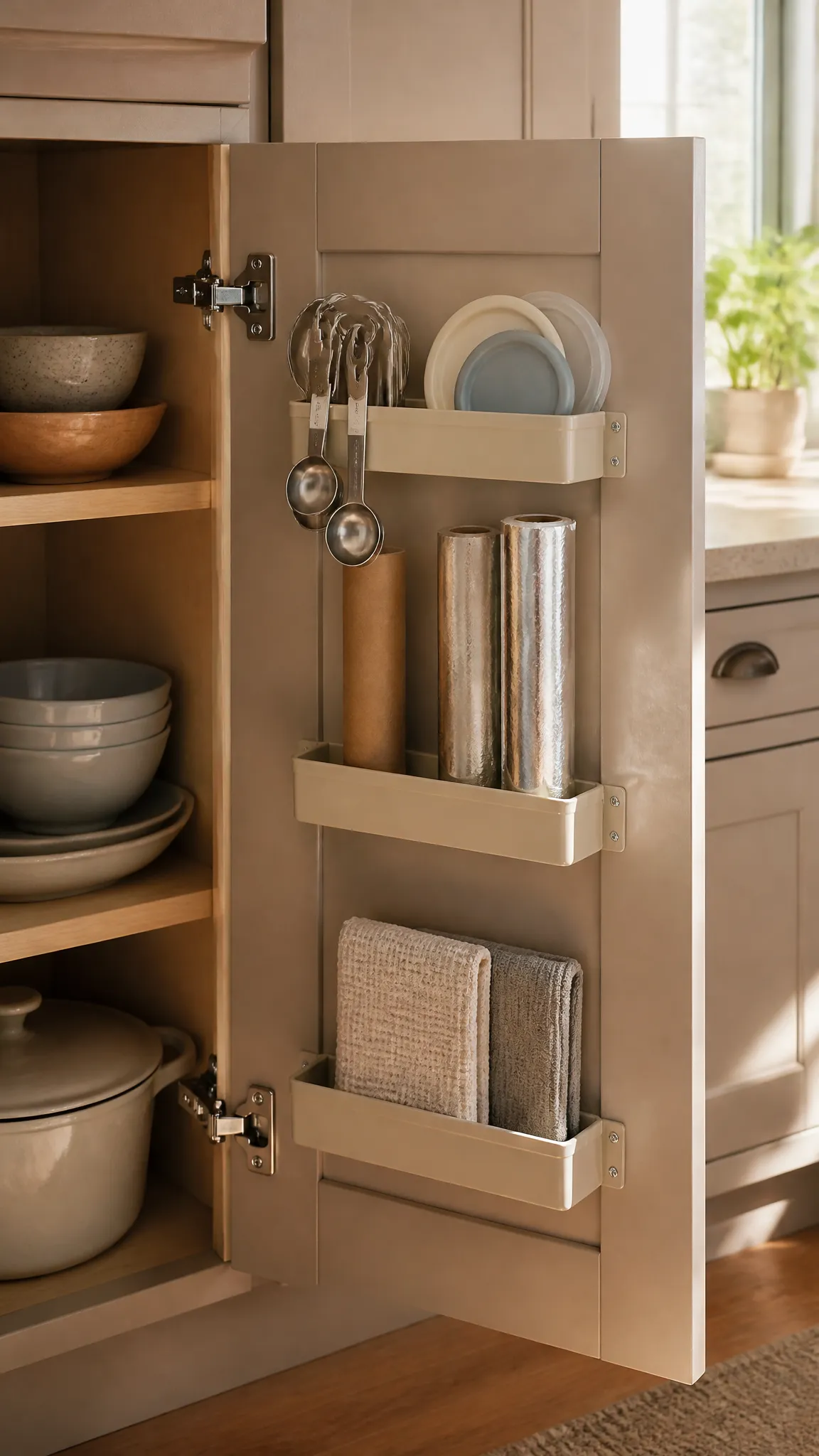
The inside of a cabinet door can hold measuring spoons, pot lids, foil, wraps, or narrow cleaning supplies. This works best for lightweight pieces that won’t strain hinges or collide with interior shelves.
Close the door slowly while testing placement, then secure the organizer only after confirming clearance. Keep hardware away from recessed door panels and use shallow racks so the cabinet still closes cleanly.
5. Create a Dedicated Lid Drawer
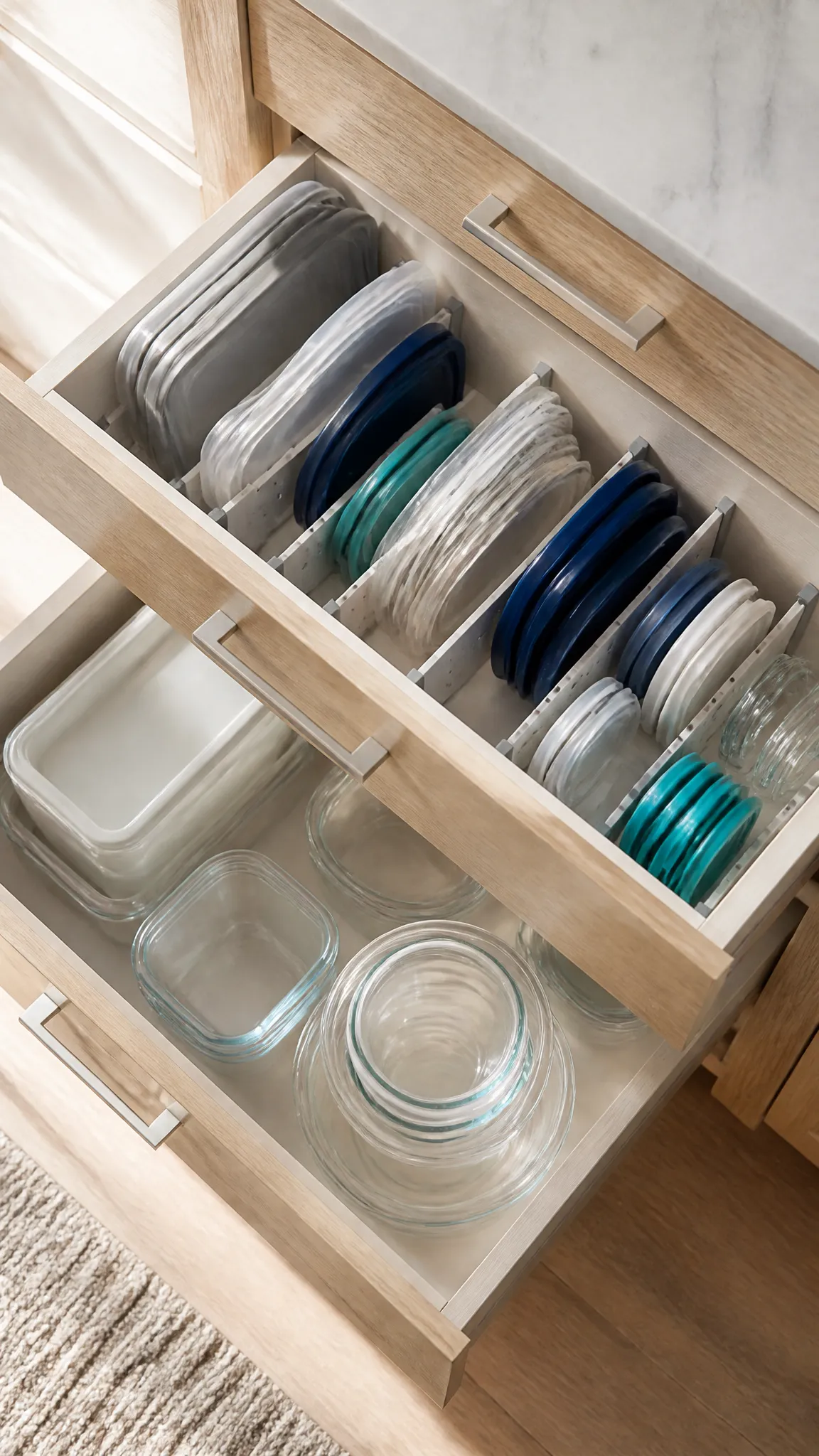
Container lids are easier to manage when they have one defined home rather than floating between several cabinets. A shallow drawer with dividers can separate lids by shape, size, or container type.
Store lids vertically like files and remove pieces that no longer match a container. Limiting the collection to complete sets keeps the drawer useful instead of overcrowded.
6. Install Toe-Kick Drawers
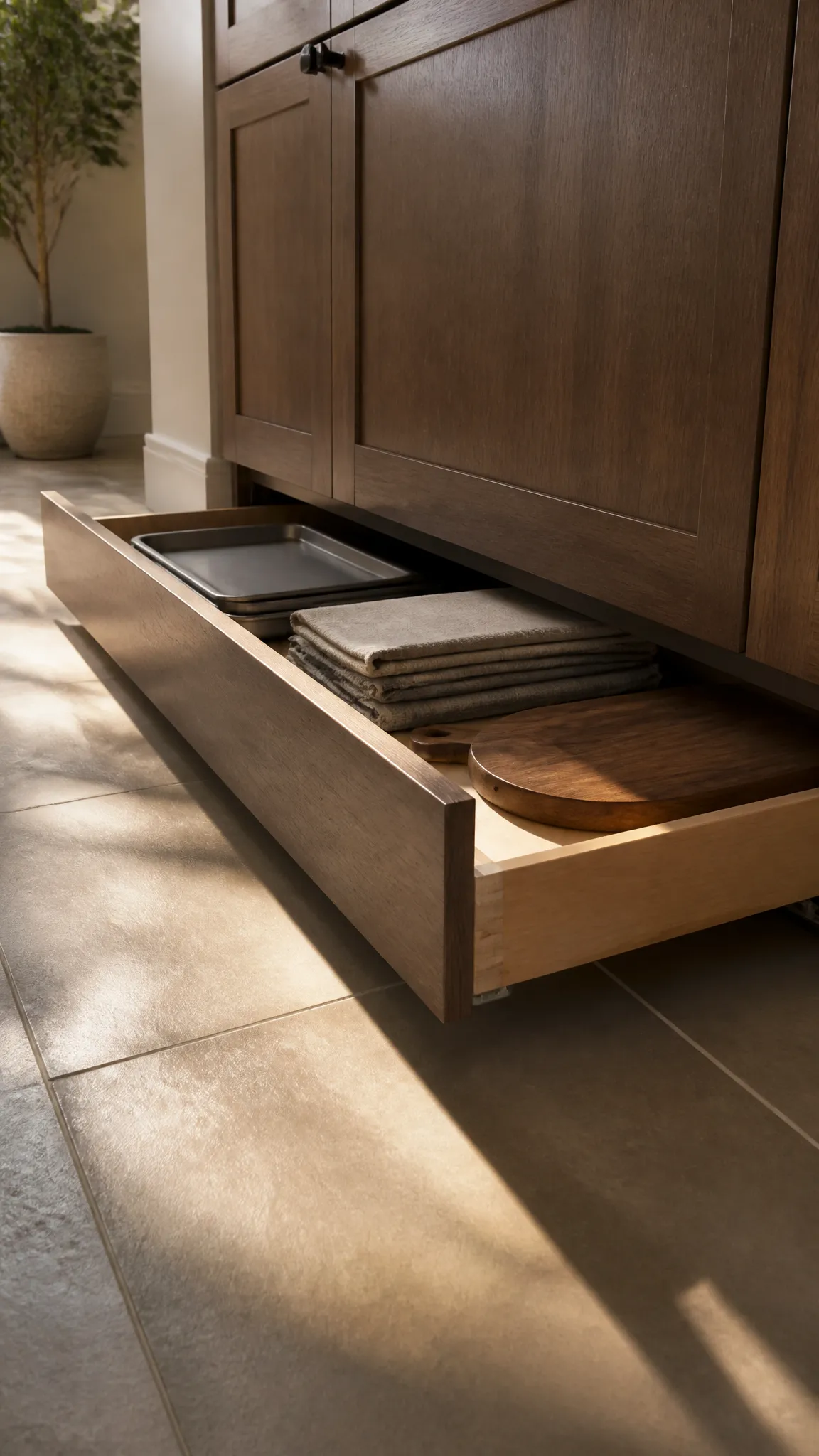
The recessed space beneath base cabinets can become low-profile storage for flat, occasional-use items. Toe-kick drawers are well suited to baking sheets, table linens, serving boards, and spare oven racks.
This modification is easiest during cabinet installation, although a cabinet professional may be able to retrofit suitable units. Avoid storing food or anything sensitive to floor-level dust and moisture.
7. Add a Shelf Above Upper Cabinets
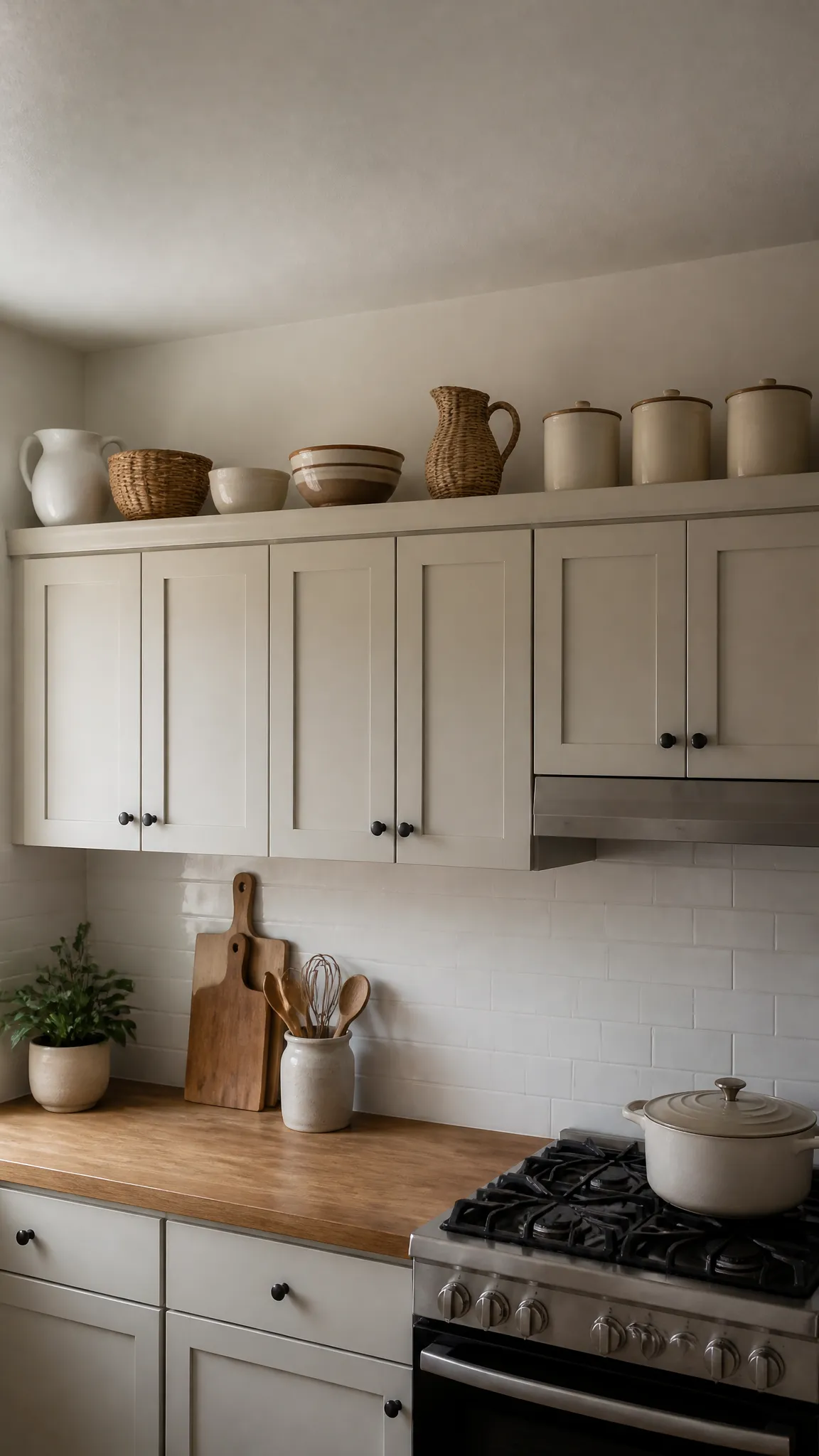
If upper cabinets stop below the ceiling, the open area can hold attractive pieces that aren’t needed every day. One continuous shelf looks more intentional than scattered baskets sitting directly on cabinet tops.
Use it for serving bowls, pitchers, or matching lidded bins, and keep the arrangement simple. Leave enough clearance for safe access and choose washable containers because high surfaces collect cooking residue.
Make Walls and Vertical Space Work Harder
8. Mount a Magnetic Knife Strip
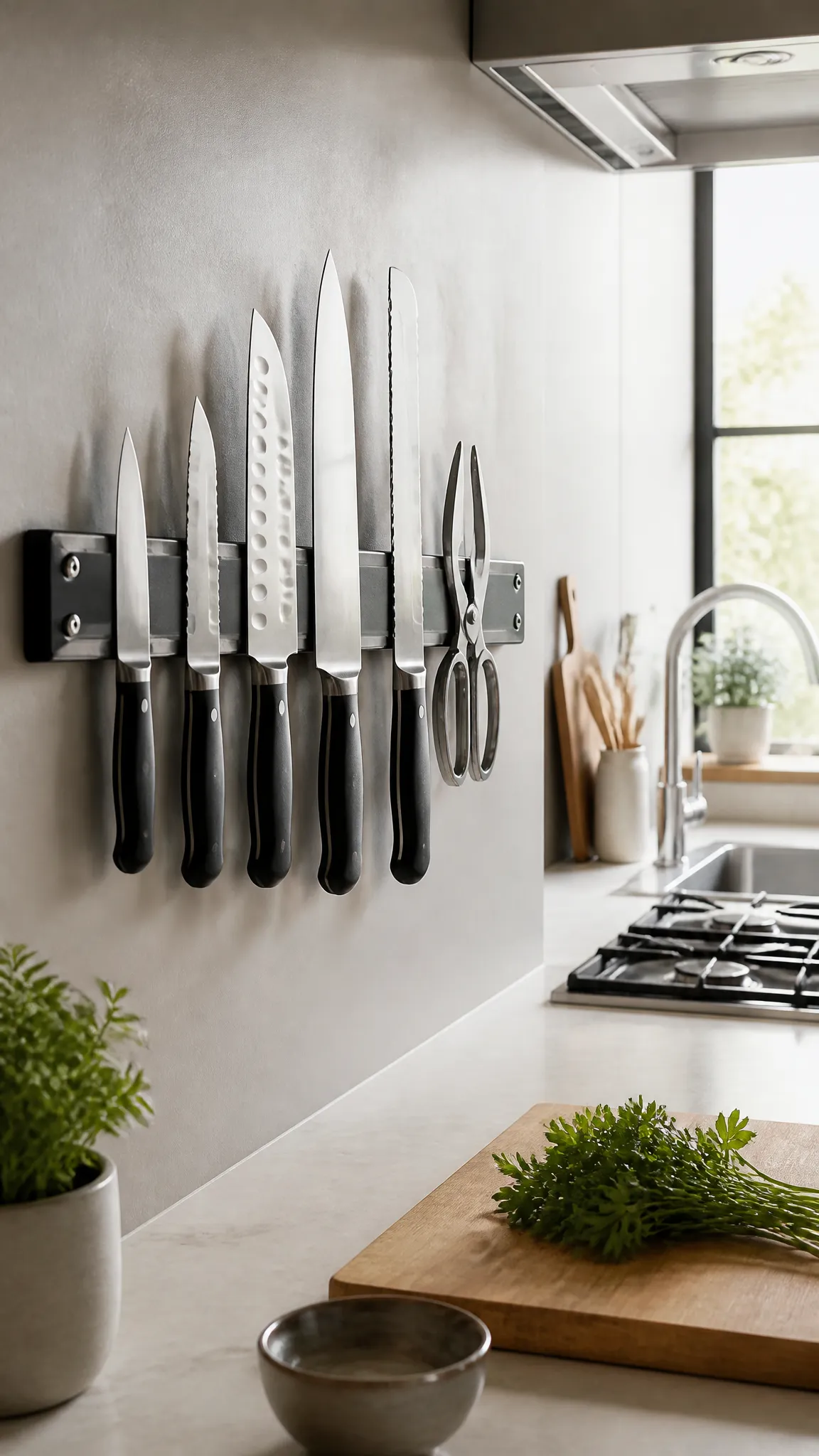
A wall-mounted knife strip frees a drawer or counter block while keeping cutting tools visible and easy to reach. Install it near the prep area but outside the path of splashing water and busy doorways.
Anchor the strip securely and position knives with handles accessible but blades away from children. If exposed blades feel too prominent, use the strip for metal utensils or kitchen shears instead.
9. Hang a Rail for Everyday Tools
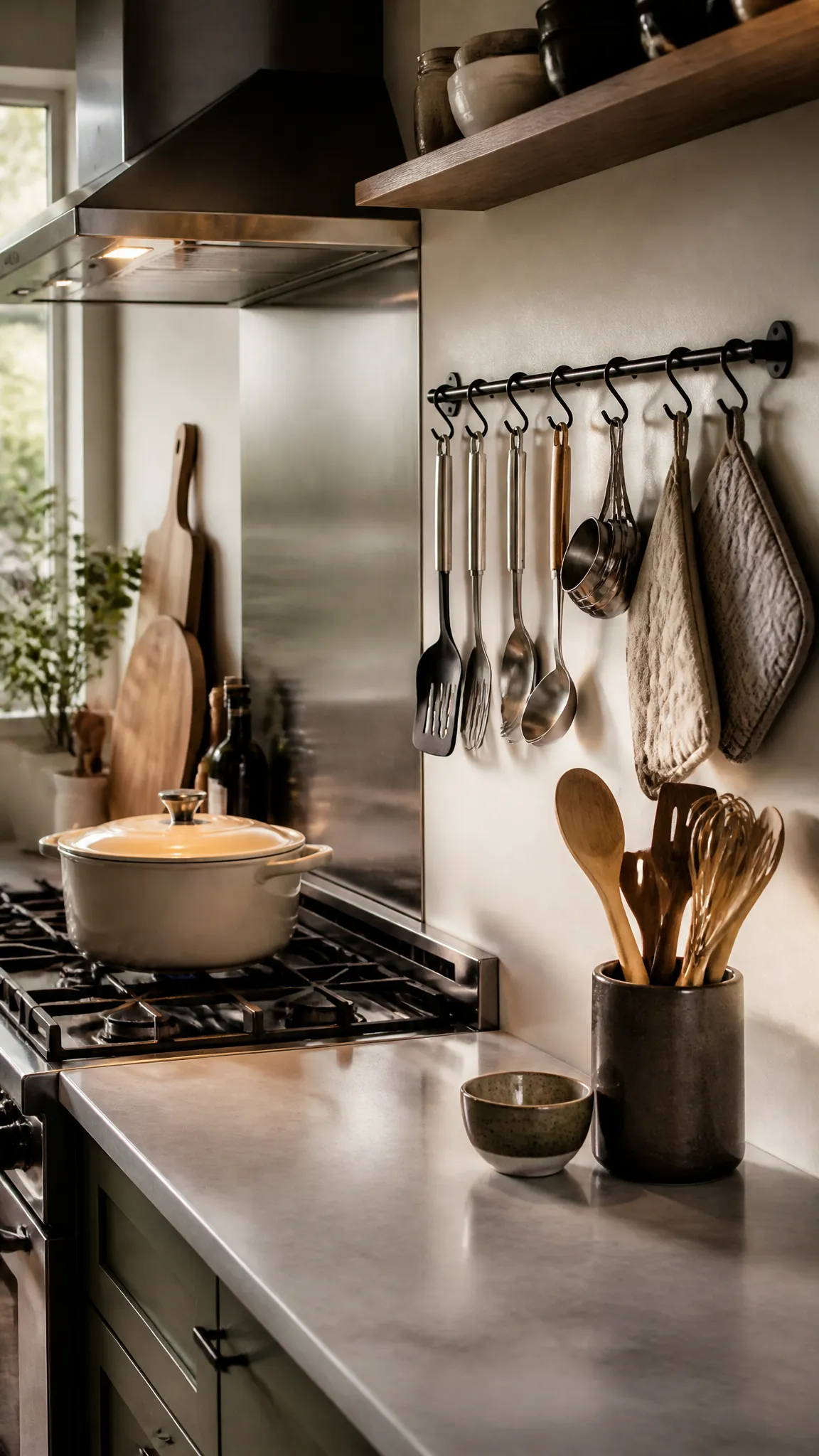
A slim rail can organize ladles, spatulas, measuring cups, and potholders without consuming drawer space. It also keeps frequently used tools close to the range or prep zone.
Hang only a restrained selection so the wall doesn’t feel crowded. Match hooks to the weight of each item, and allow enough distance from burners to protect handles from heat and grease.
10. Build a Shallow Pantry Wall
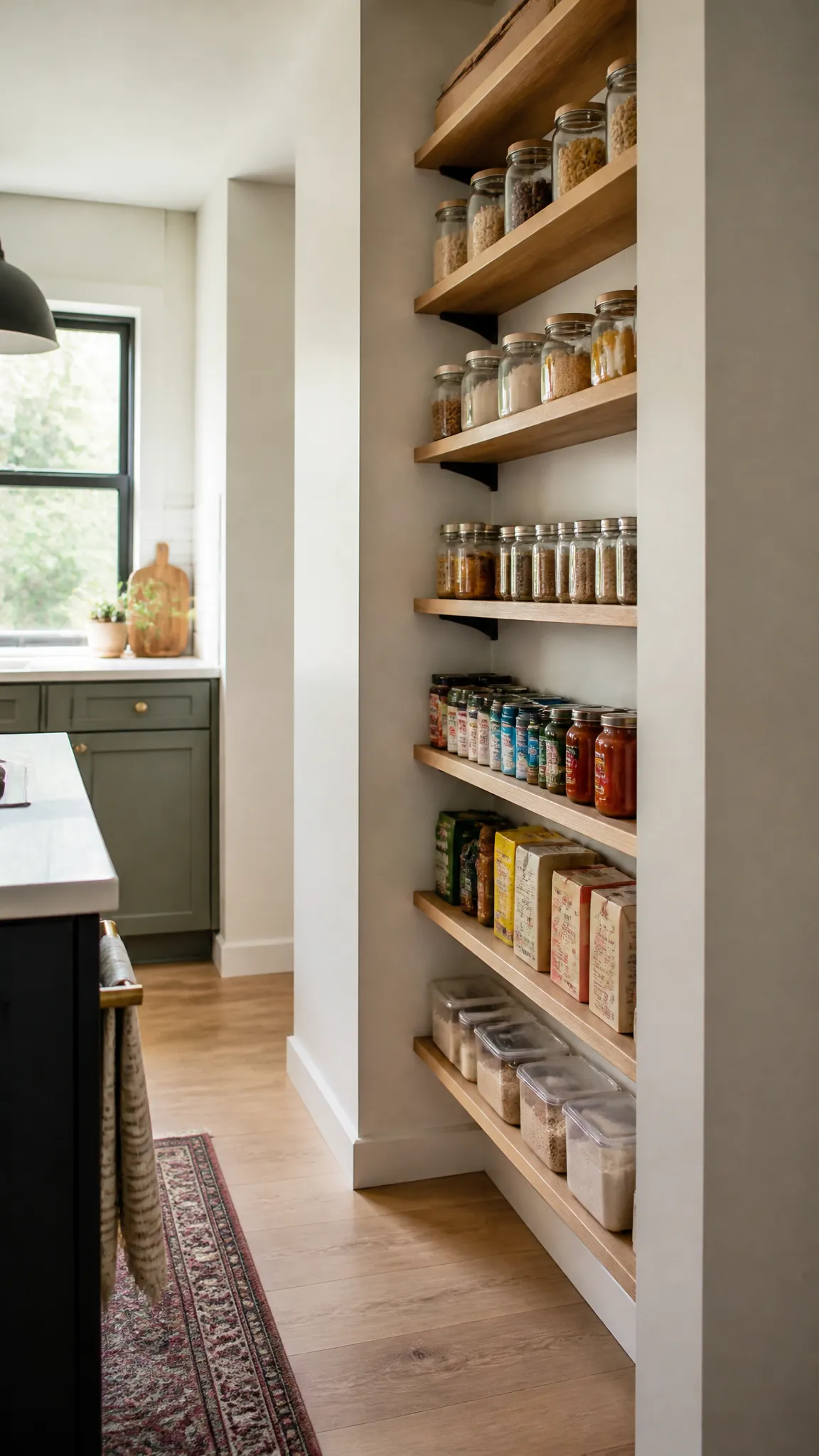
A pantry doesn’t need to be deep to hold cans, jars, spices, and boxed food. Shallow shelves keep labels visible and prevent ingredients from disappearing behind multiple rows.
Look for an underused stretch of wall near the kitchen or dining area. Shelves around 6 to 10 inches deep can provide useful storage while preserving a comfortable walkway, depending on the room.
11. Add Shelves Across a Window
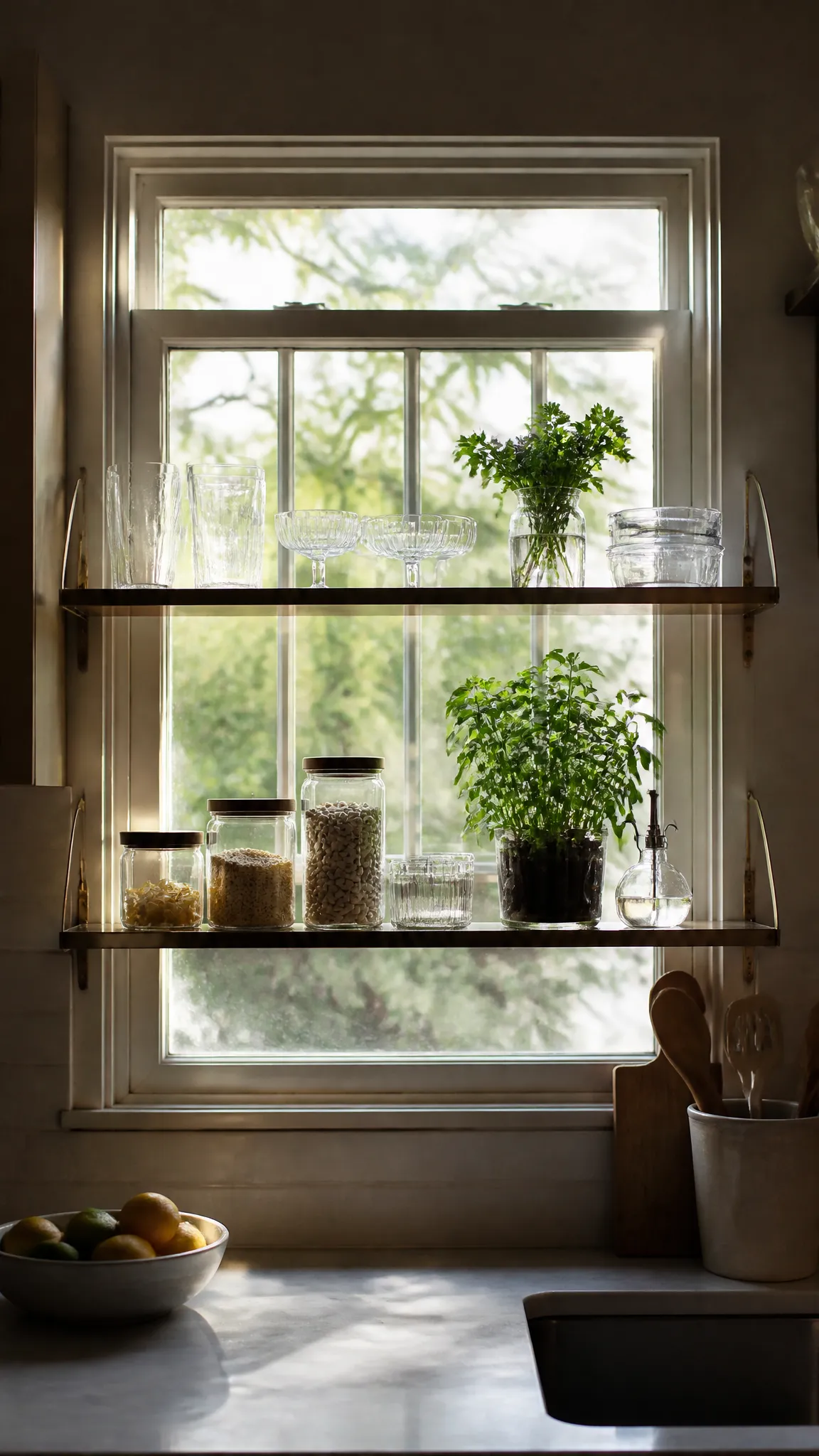
A shelf crossing part of a kitchen window can create storage without fully sacrificing daylight. Glassware, translucent containers, and small plants allow more light through than solid cookware or bulky appliances.
Use this approach only where the window remains operable and emergency access isn’t affected. Keep the display sparse and secure each shelf to framing with moisture-resistant hardware.
12. Extend Storage Around a Doorway
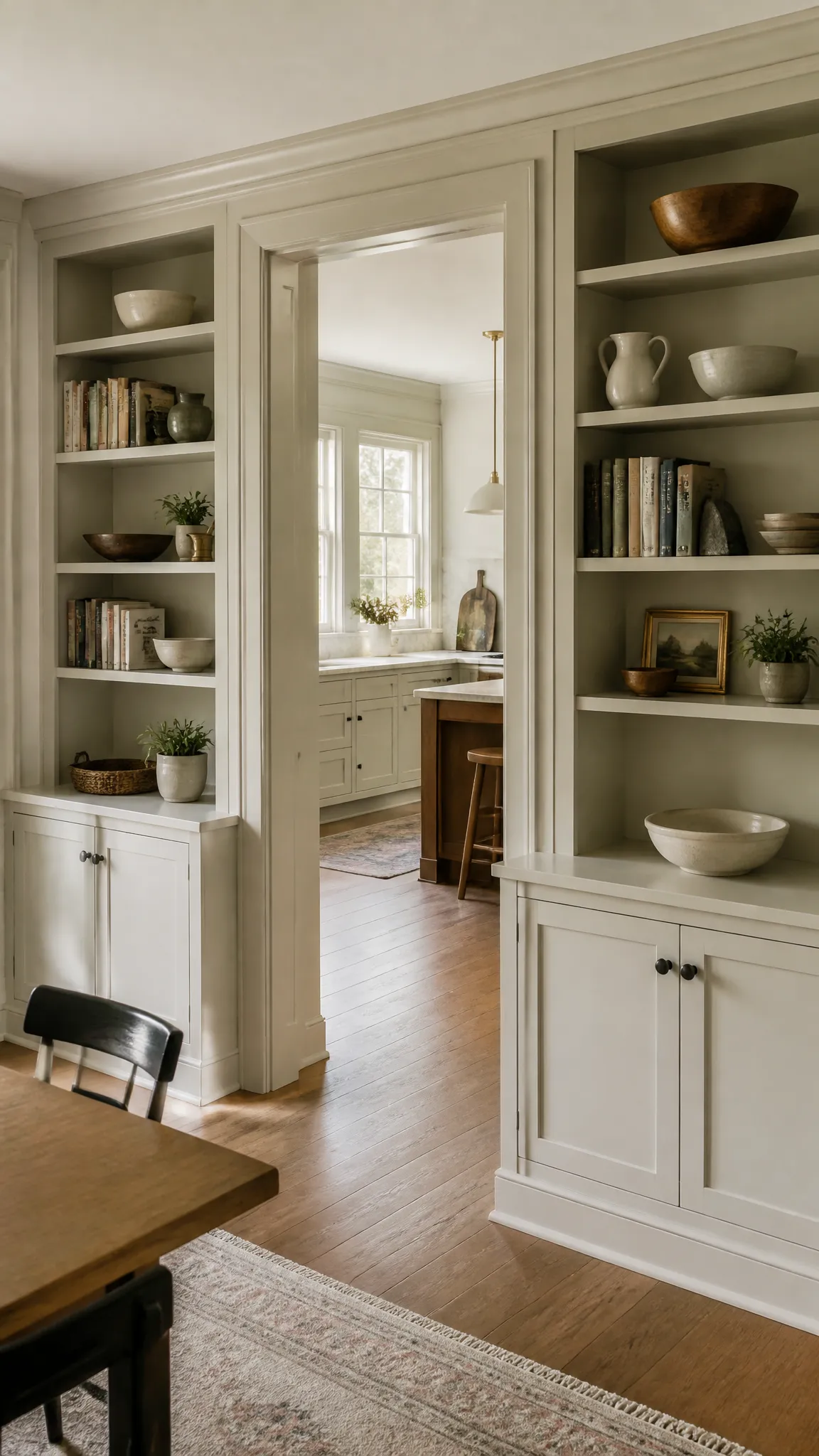
Narrow cabinets or shelves beside and above a doorway can turn leftover wall space into a compact pantry or cookbook zone. Painting the storage the same color as the wall helps the doorway feel integrated.
Keep lower sections shallow enough to protect the passage, and reserve the overhead cabinet for lightweight, infrequently used items. Confirm that doors and drawers don’t interfere with traffic flow.
13. Use a Pegboard as Adjustable Storage
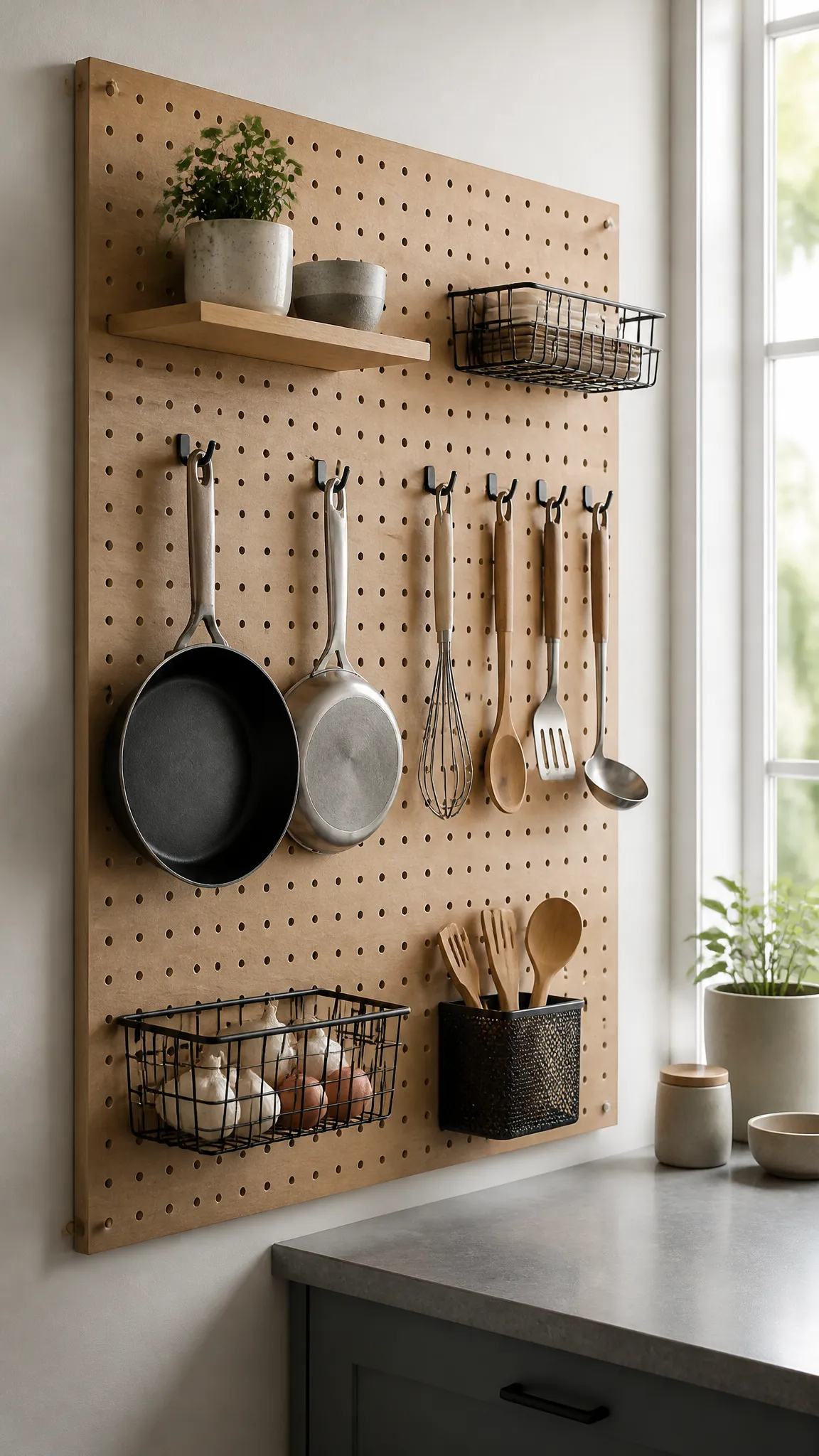
Pegboard provides flexible storage for pans, utensils, baskets, and small shelves. Unlike fixed hooks, the arrangement can change when your tools or cooking habits change.
Mount it with spacers so hooks fit correctly, then trace a loose working zone around your prep area. Leave some open space between objects to maintain visual order and make cleaning easier.
Improve Counters and Work Zones
14. Add an Over-the-Sink Cutting Board
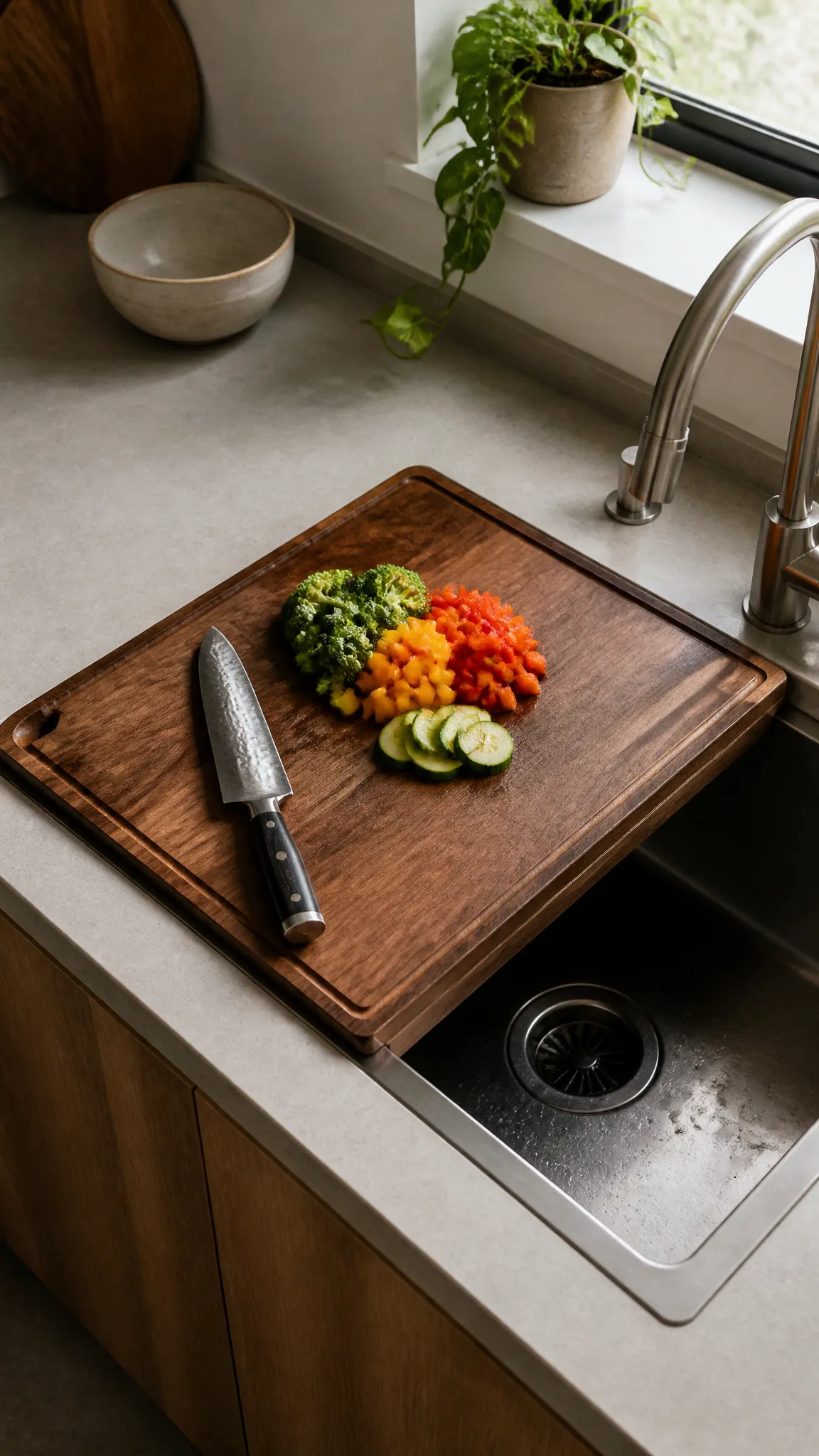
A fitted cutting board spanning the sink creates temporary prep space when counters are limited. It’s useful for chopping produce, assembling sandwiches, or setting down ingredients during a busy meal.
Choose a board with secure edges or feet so it can’t slide into the basin. Remove it when you need the faucet, and dry it upright after washing to reduce trapped moisture.
15. Turn One Burner Into Extra Workspace
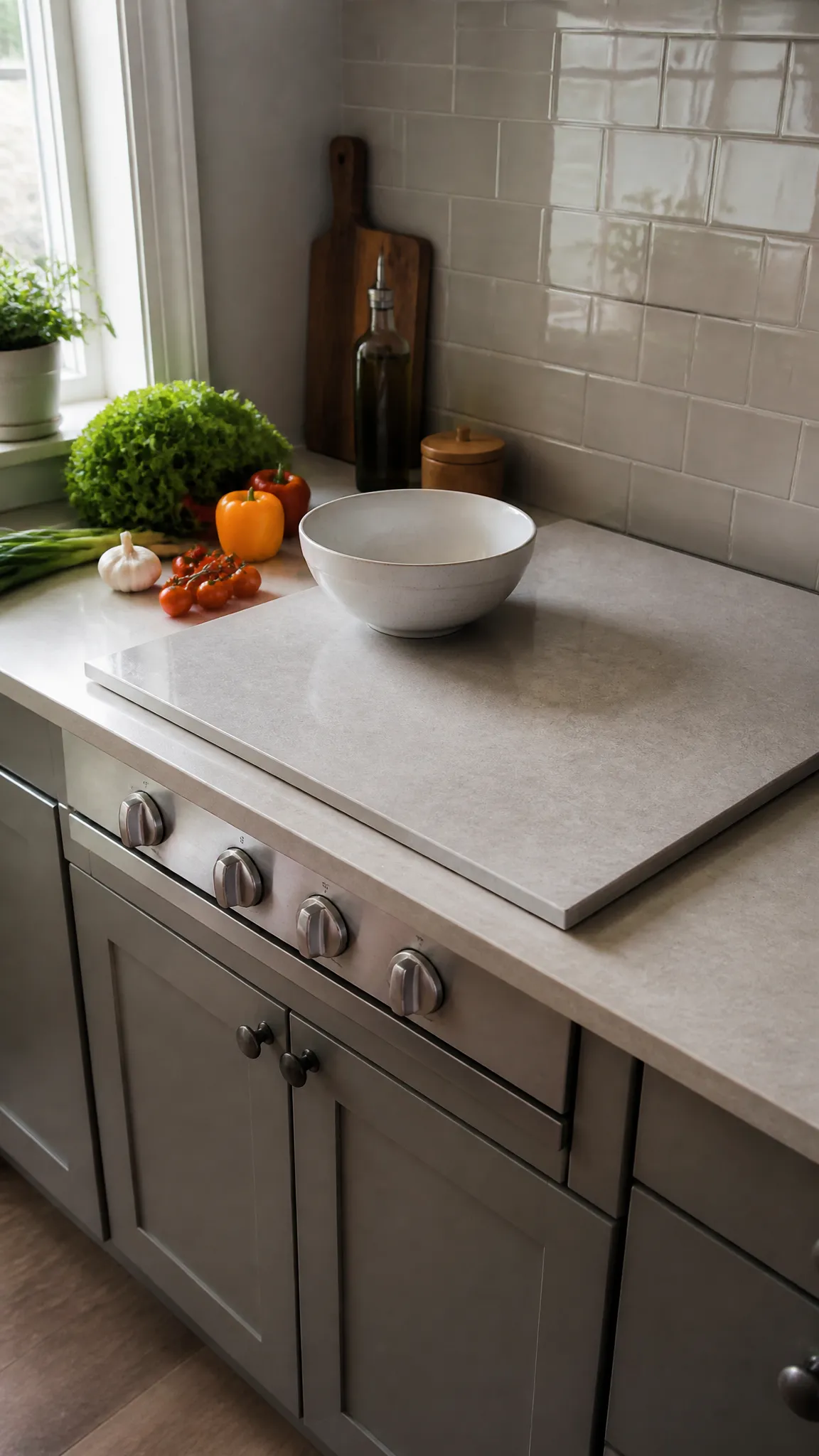
A removable stove cover can provide another landing spot when the cooktop is completely cool and not in use. It works well for grocery unloading, plating, or holding lightweight prep tools.
Treat the cover as temporary equipment rather than permanent counter space. Establish a designated place to store it before cooking, and never place it over a warm burner.
16. Choose a Mobile Prep Cart
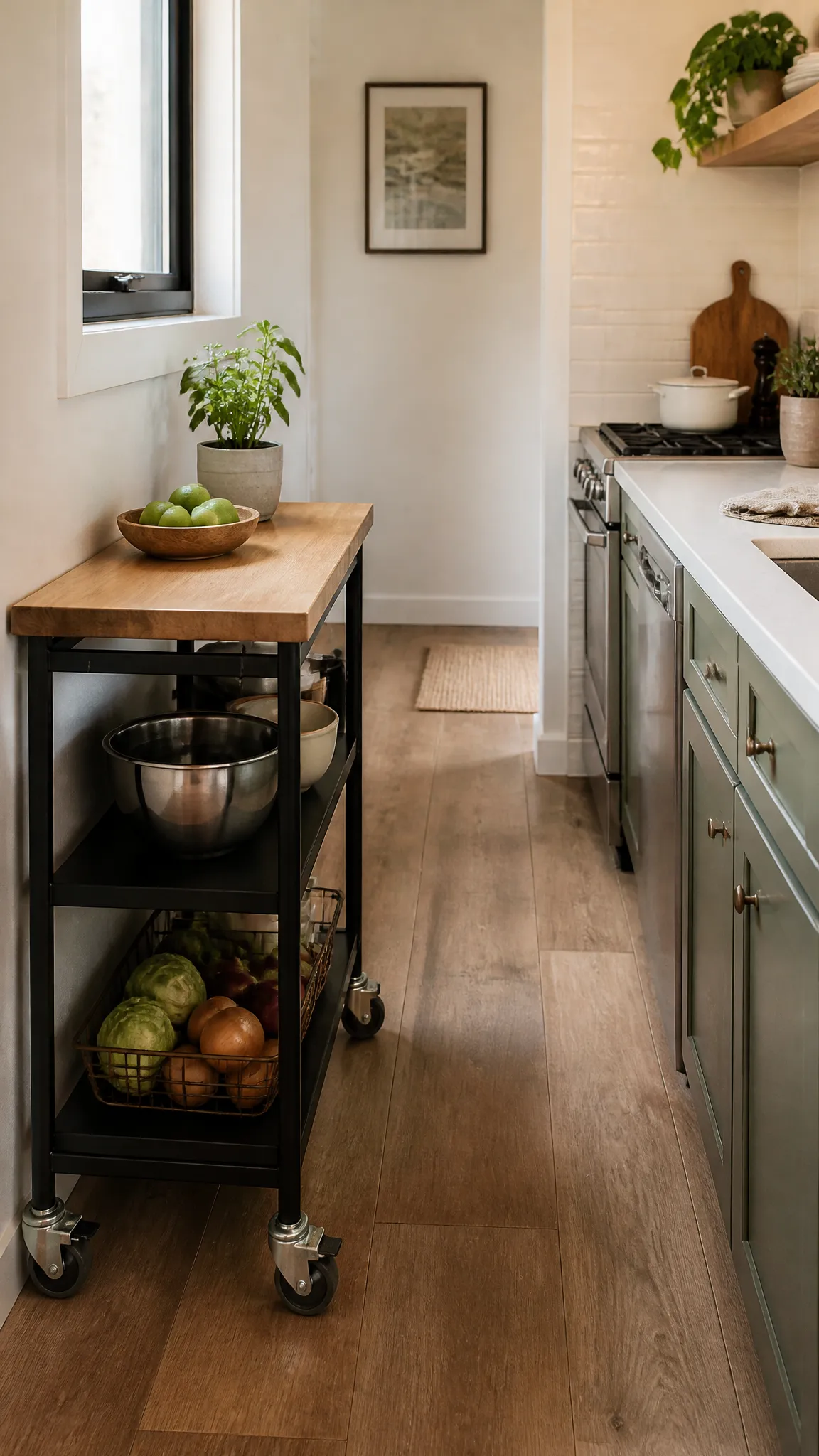
A narrow rolling cart adds a work surface and storage without committing to a fixed island. You can position it beside the counter during prep and move it aside when the floor needs to stay open.
Look for locking casters, a stable top, and dimensions that preserve comfortable walkways. Shelves below can hold mixing bowls or produce baskets, while the top remains a clear work zone.
17. Use a Drop-Leaf Table
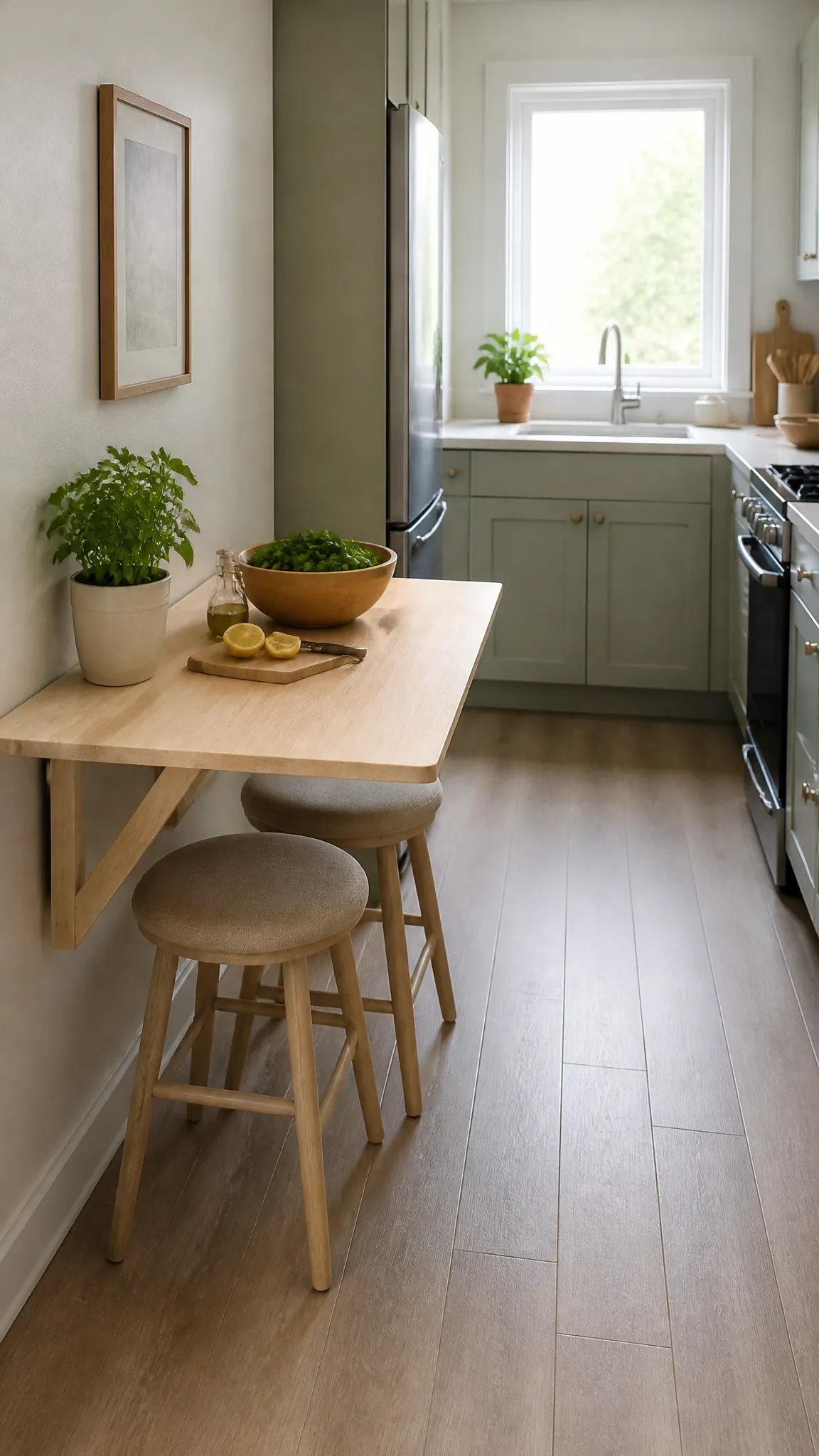
A wall-mounted or freestanding drop-leaf table can switch between dining, prep, and circulation space. It’s a practical feature in a small apartment kitchen design where one surface must serve several purposes.
Fold it down only when needed and pair it with stools that tuck underneath or hang nearby. Check that the open leaf doesn’t block appliances, doors, or the main path through the room.
18. Create a Compact Appliance Garage
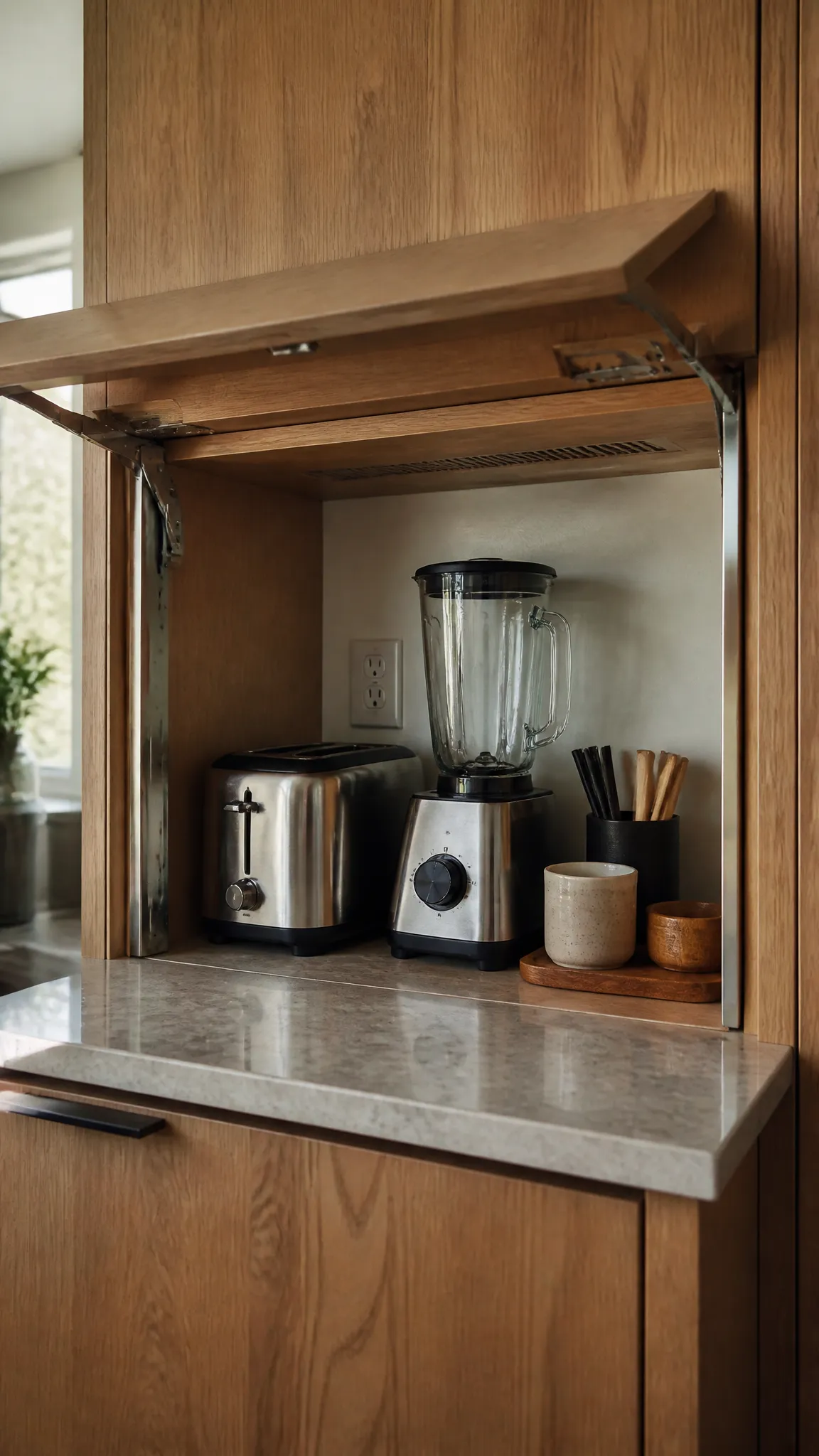
An appliance garage keeps a toaster, blender, or coffee maker accessible while reducing counter clutter. A lift-up, retracting, or pocket-style door avoids the wide swing of a conventional cabinet door.
Plan outlets and ventilation with a qualified professional, and follow appliance instructions about enclosed use. Group accessories nearby so the station supports one complete routine rather than becoming miscellaneous storage.
19. Set Up a Focused Coffee Station
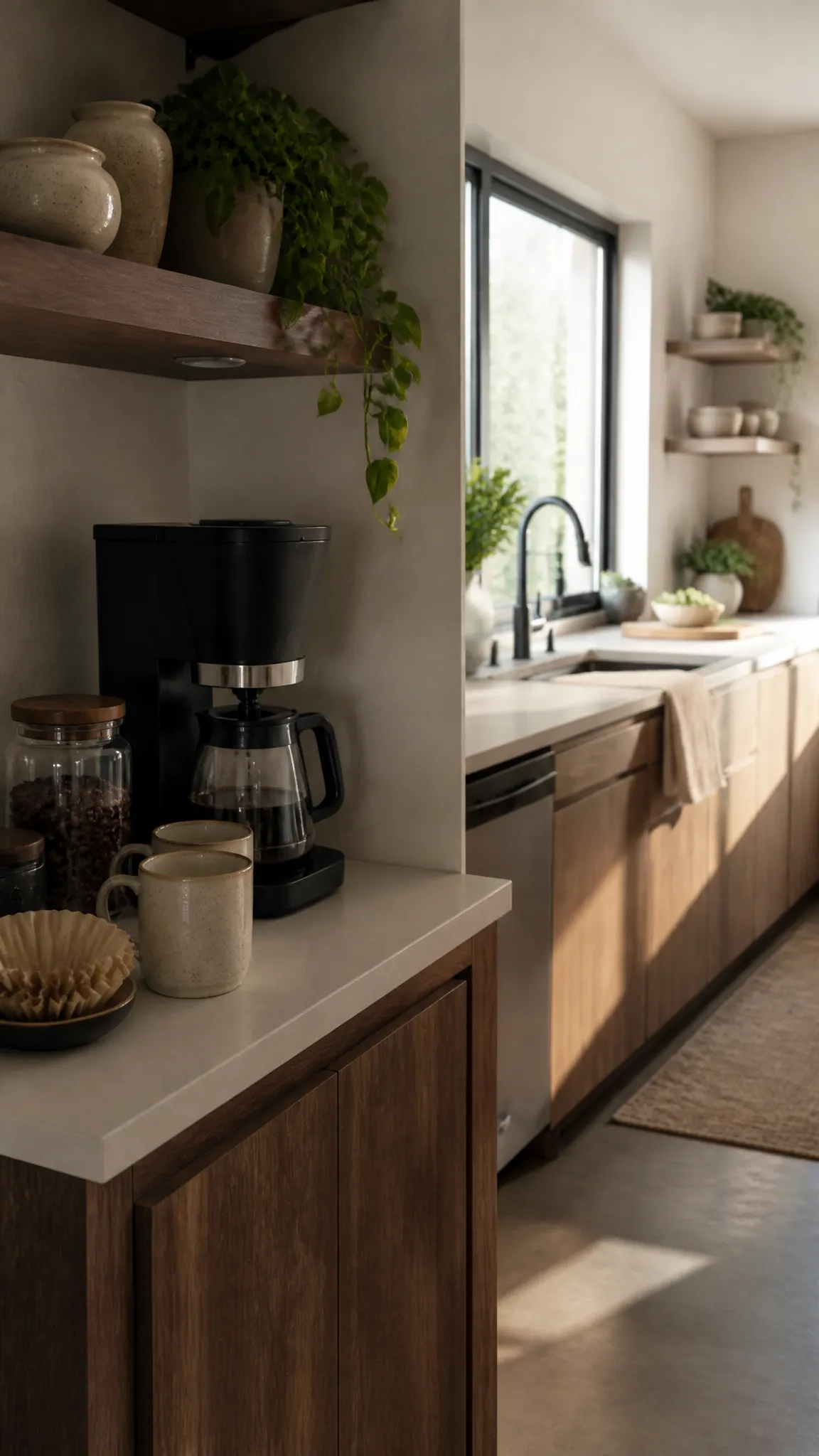
Moving coffee supplies away from the main cooking zone can prevent morning traffic around the sink and range. Among the most useful small kitchen ideas, this one improves flow without requiring construction.
Place the machine near water and an appropriate outlet, then store mugs, filters, and beans directly above or below it. Keep the station narrow so it doesn’t absorb valuable food-prep space.
Fix Flow and Awkward Layouts
20. Keep the Center Aisle Clear
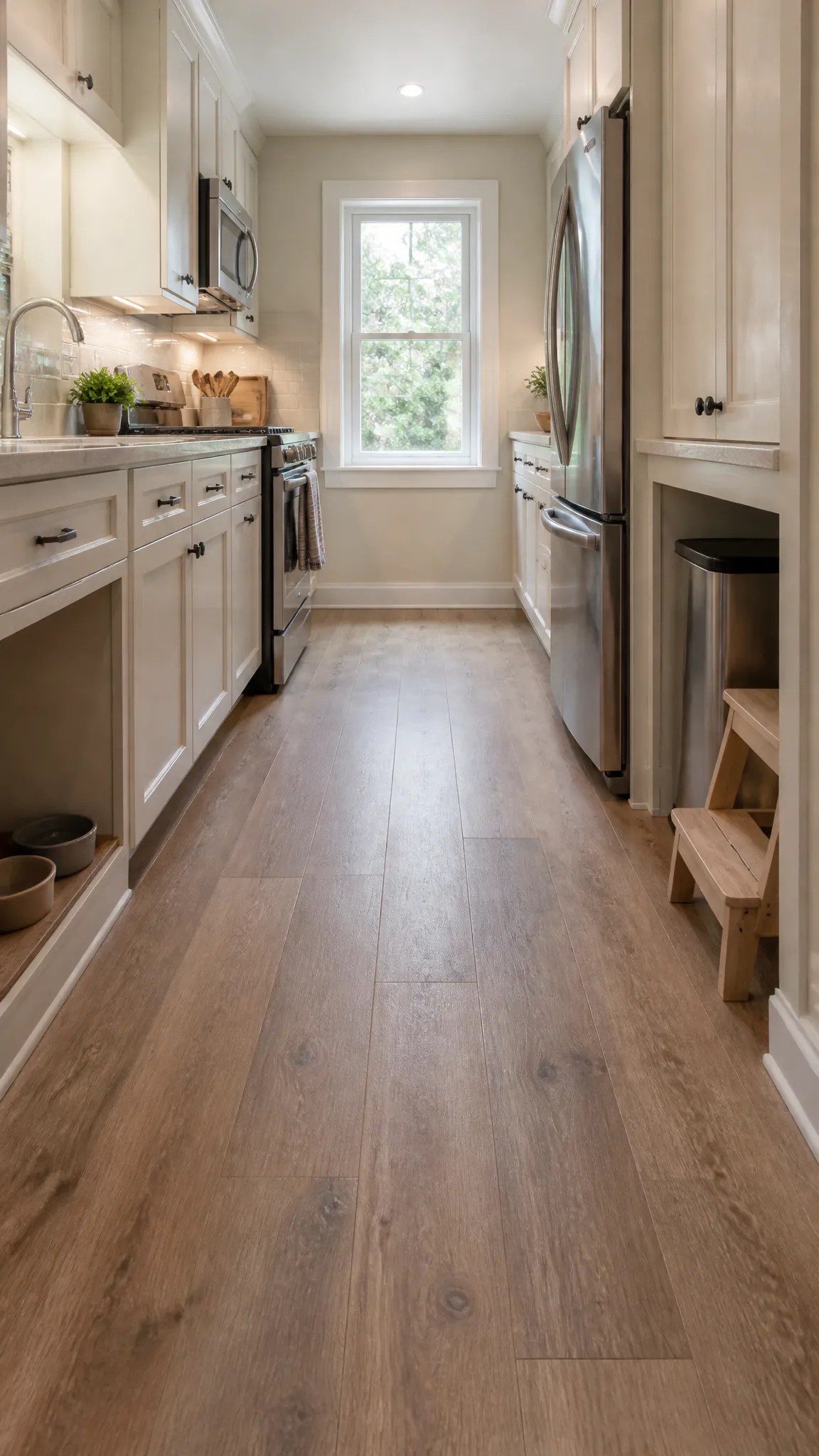
In a narrow kitchen, floor space is often more valuable than an extra cart or bin. Keeping the center aisle open makes it easier to carry hot food, open appliances, and share the room.
Move trash cans, pet bowls, and step stools into planned recesses or end-of-cabinet zones. A clear walking path can make a kitchen for small spaces feel more functional than adding another storage piece.
21. Add Storage to a Blind Corner
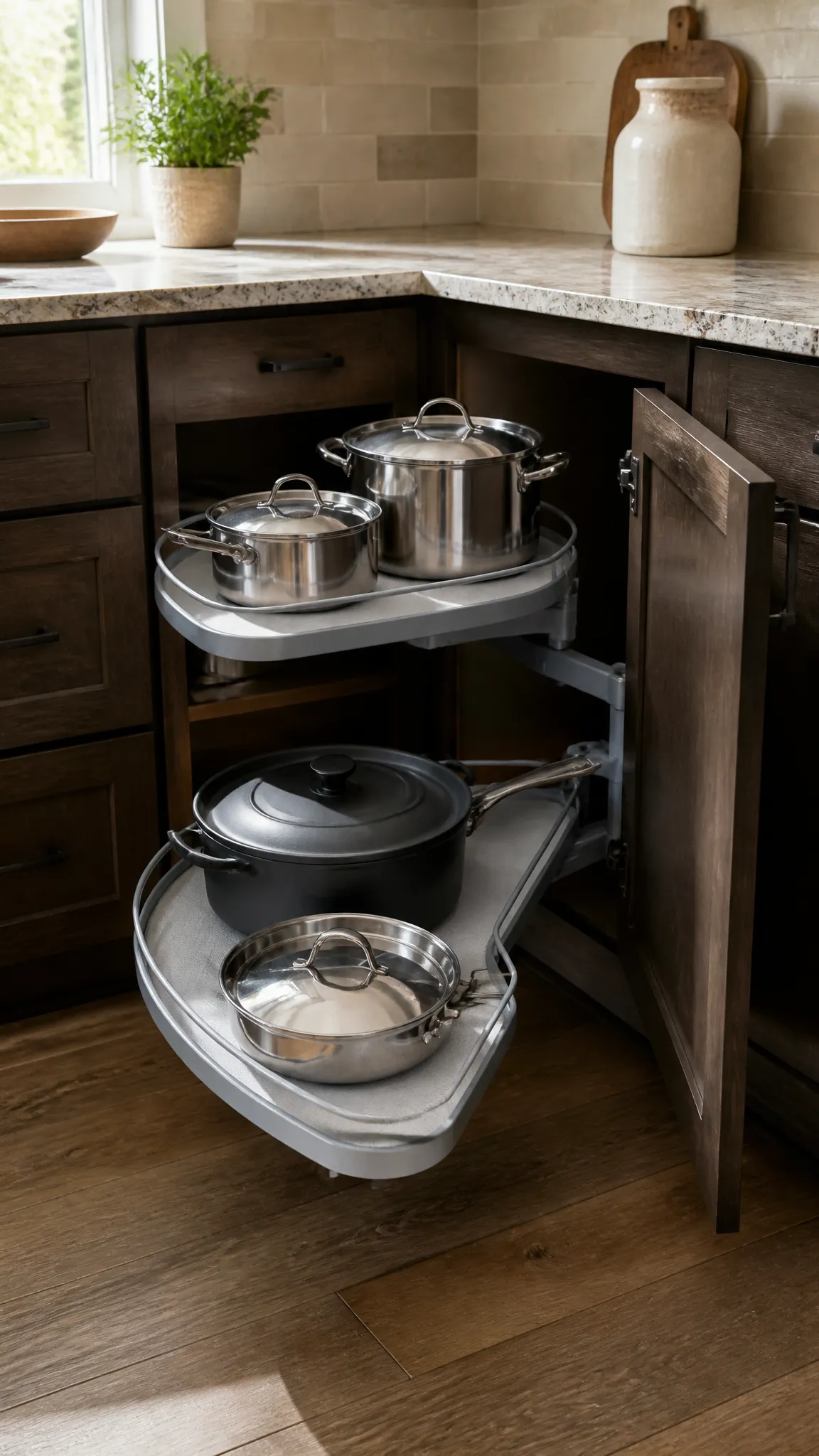
Corner cabinets can waste space when items disappear beyond the door opening. Kidney-shaped pullouts, corner drawers, and swing-out shelves are common awkward kitchen layout solutions that bring contents forward.
Select hardware based on the cabinet’s exact opening, hinge position, and interior dimensions. Store bulky cookware there instead of tiny items that can fall behind a moving mechanism.
22. Use Cabinet Ends as Landing Zones
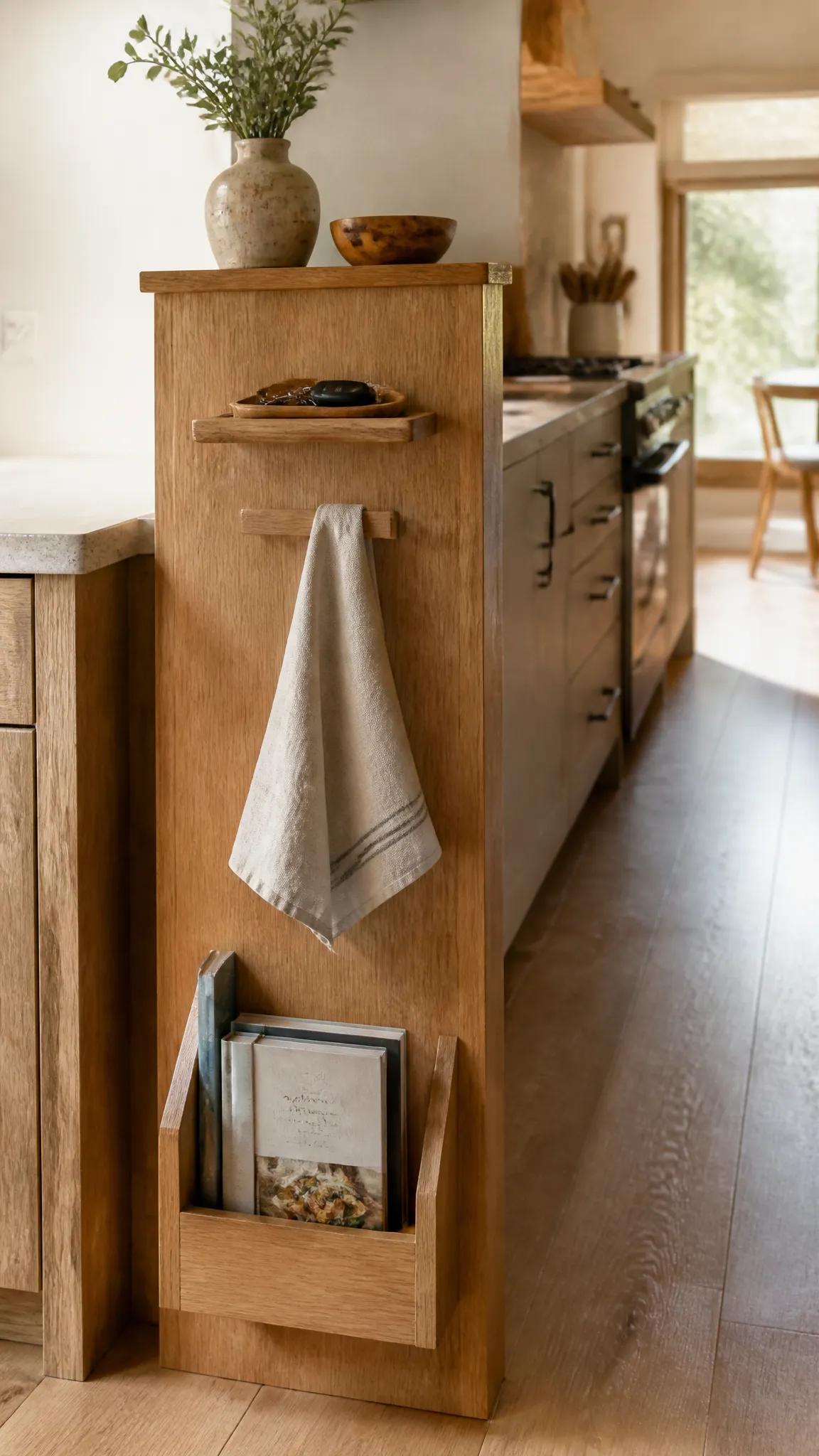
The exposed end of a cabinet run can support a narrow shelf, key tray, cookbook rack, or hanging rail. This turns a vertical panel into storage without narrowing the main work surface.
Match the addition to how you enter and use the room. Near an entry, create a compact drop zone; beside the range, use it for cooking references or towels.
23. Move the Trash Near the Prep Area
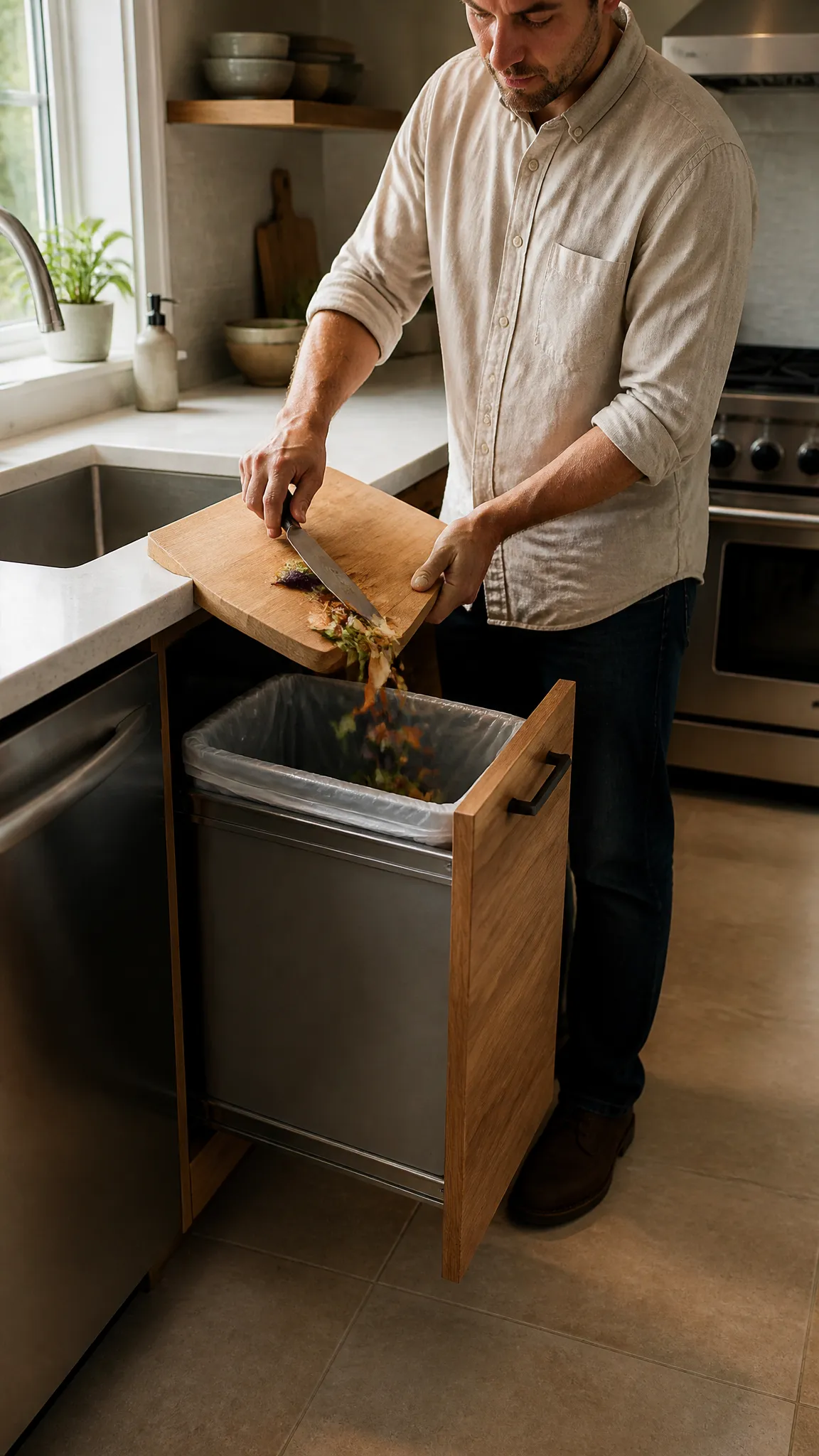
A trash or compost bin positioned near the main cutting surface reduces repeated steps across the kitchen. A pullout beside the sink often supports cleanup and food preparation in the same zone.
Confirm that the open bin won’t block the dishwasher, oven, or only walkway. If cabinet space is unavailable, choose a slim freestanding container with a tight-fitting lid.
24. Assign Storage by Task
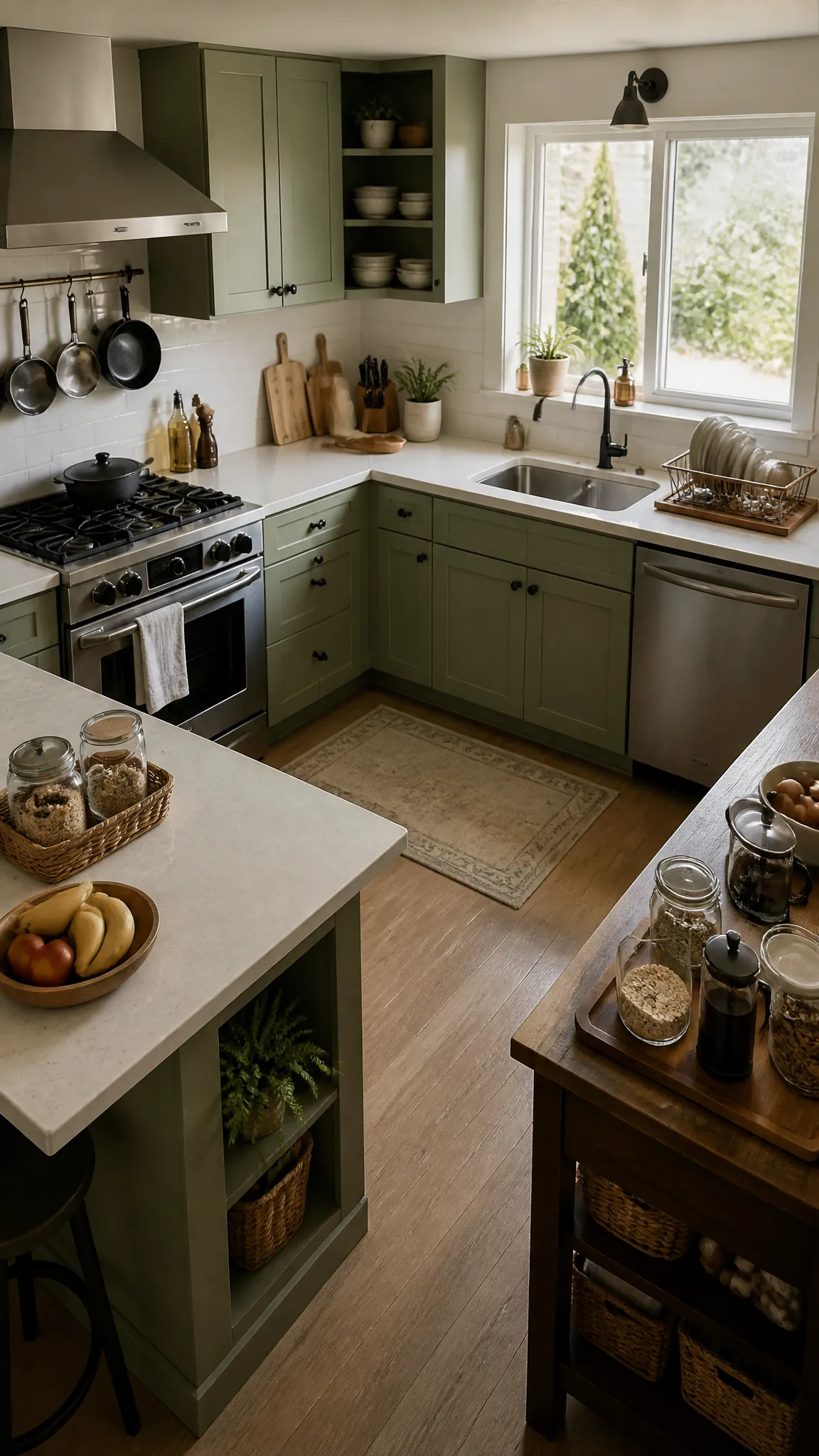
Good small kitchen planning ideas begin with routines, not empty cabinet space. Store knives and boards near prep, pans near the range, dishes near the dishwasher, and breakfast items together.
Track where you naturally reach during one typical meal, then move supplies closer to that point. Reducing back-and-forth movement often improves everyday flow more than adding another organizer.
25. Leave One Counter Section Empty
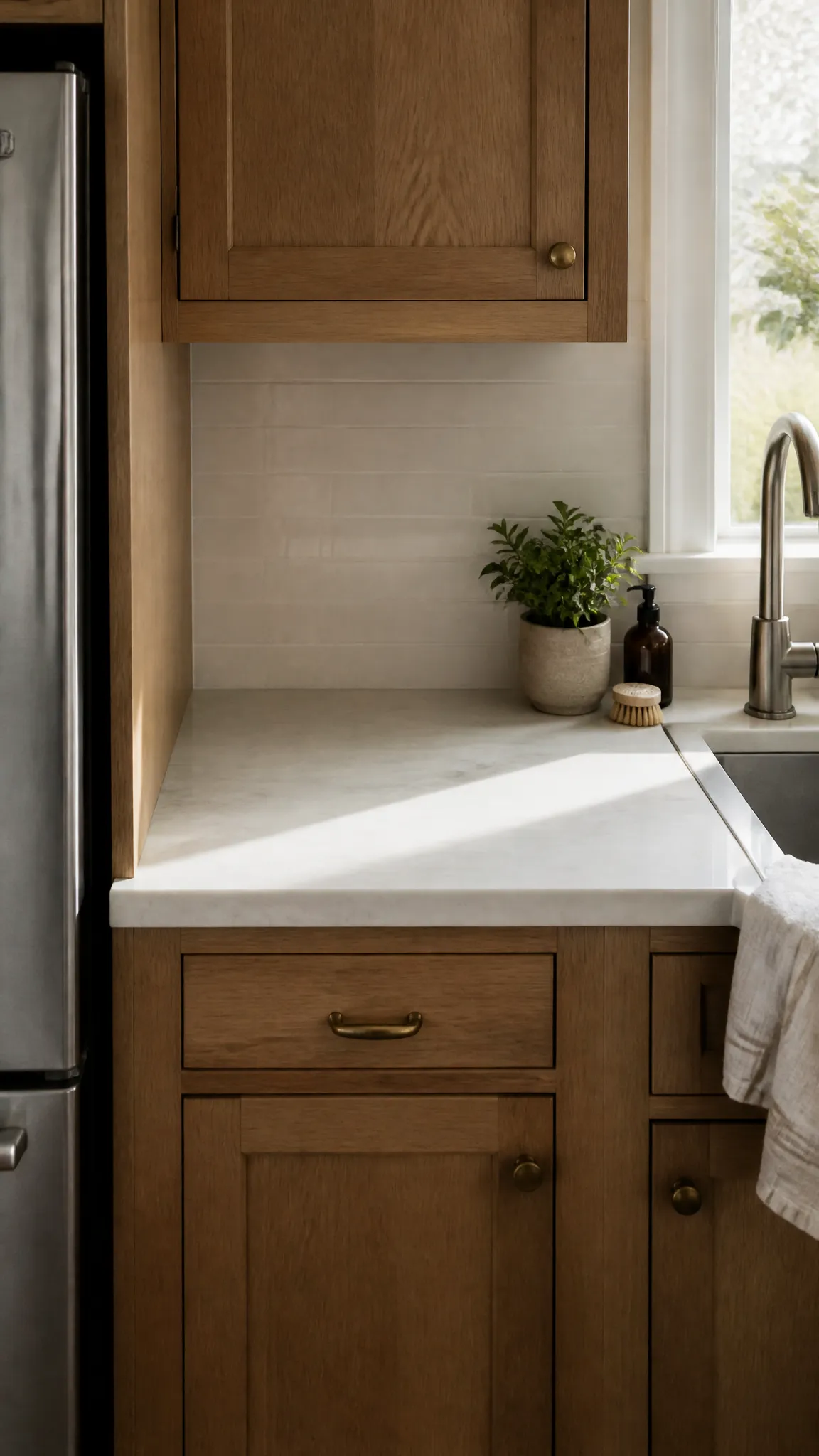
An intentionally empty stretch of counter gives you room to unpack groceries, plate dinner, or handle an unexpected task. Without a clear landing area, every activity begins by relocating appliances and decorations.
Choose one section near the refrigerator, sink, or range and protect it from gradual clutter. Move rarely used equipment into cabinets and limit countertop storage to true daily essentials.
Frequently Asked Questions
How can I add storage to a small kitchen without remodeling?
Start with removable additions such as shelf risers, drawer dividers, door-mounted racks, magnetic strips, and a rolling cart. Measure carefully and focus on underused vertical space before buying more containers.
What colors make a small kitchen feel larger?
Light, low-contrast finishes can make boundaries feel less abrupt, but white isn’t required. Soft neutrals, pale woods, muted colors, and consistent cabinet and wall tones can all support a more open appearance.
Should upper cabinets reach the ceiling?
Ceiling-height cabinets add storage and reduce dust-catching gaps, but upper sections may be difficult to access. Use the highest shelves for lightweight seasonal pieces and keep a stable step stool nearby.
How do I decide which small kitchen ideas to try first?
Identify the daily frustration that costs the most time, such as blocked walkways, crowded counters, or inaccessible cookware. Fix that issue first, then reassess before adding more storage products.